
Commercial and Property Managers
Preventive HVAC Maintenance Checklist for Property Managers
By John Gach, owner of Vantage Heating and Cooling · Published · Updated
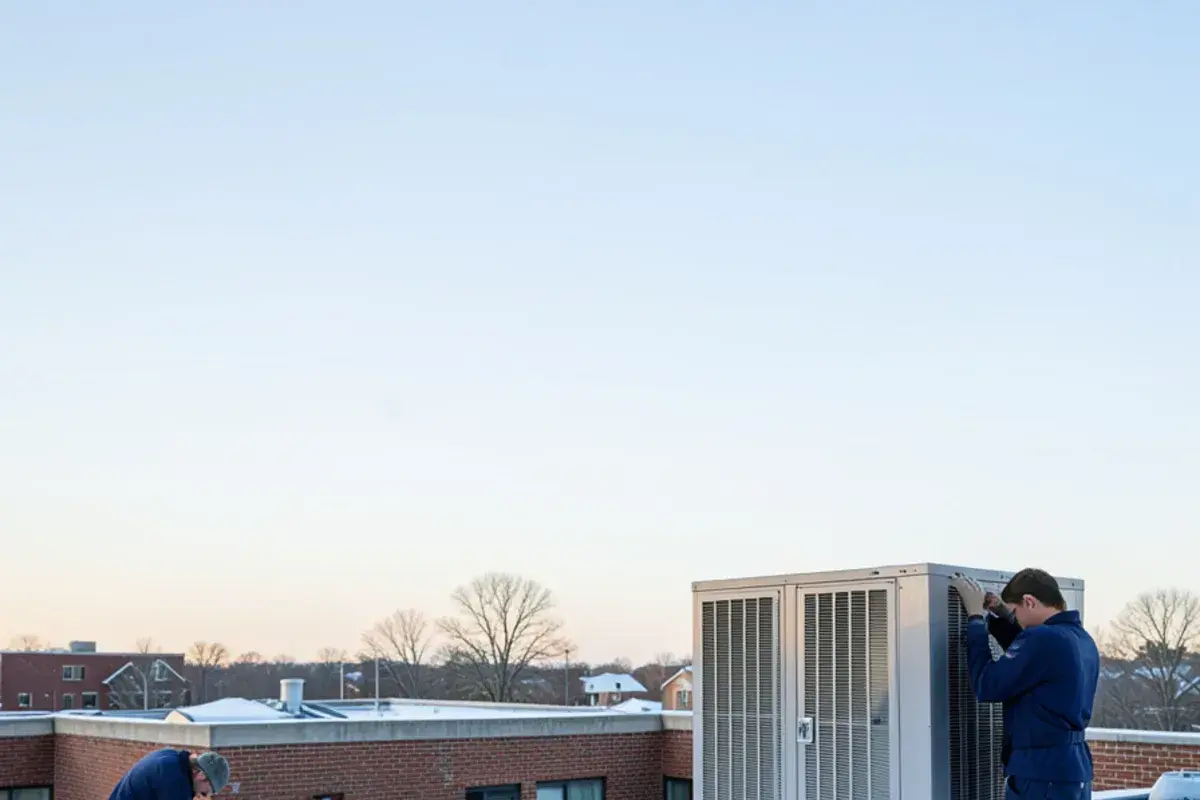
A commercial HVAC maintenance checklist works best when it is organized by interval: monthly filter checks, quarterly inspections, and a full service before each cooling and heating season. This guide is educational. It is meant for property managers and small building owners who want a clear baseline for light commercial buildings, offices, small retail and multi-unit properties.
Please call us before assuming we fit your building. Our business profile lists residential services, so we look at light commercial and small property questions one building at a time.
What standard sits behind a maintenance plan?
ANSI/ASHRAE/ACCA Standard 180 sets minimum requirements for inspecting and maintaining HVAC systems in commercial buildings. ASHRAE and ACCA developed it together, and the U.S. Department of Energy lists it among its Better Buildings resources. The Mechanical Code of New York State points to Standard 180 for maintenance inspections.
You do not need to read the whole standard to use it. Its idea is simple: write down what you inspect, how often, and what you found. The checklist below follows that idea in plain terms. Treat it as a baseline, and read your lease, insurance policy and any equipment warranty, since they may ask for more.
What should you check every month?
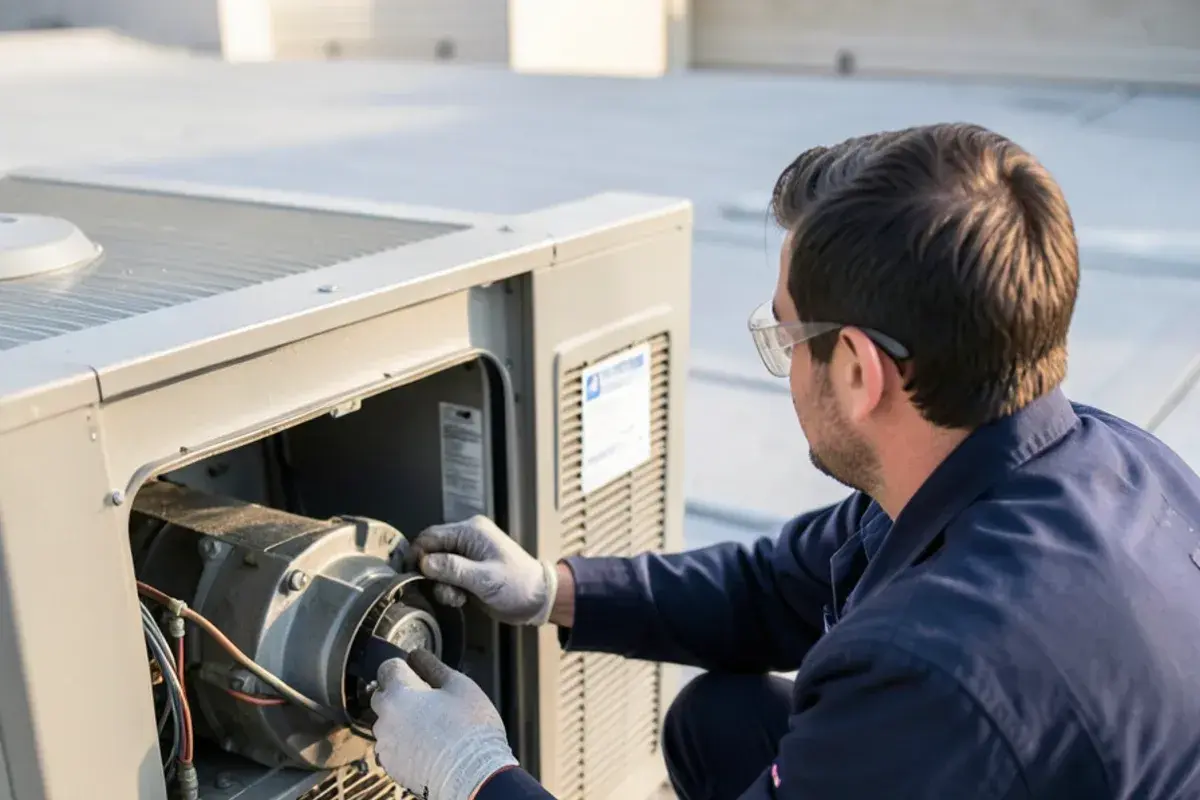
Monthly checks are quick and many can be done by building staff:
- Filters. Look at every filter. ENERGY STAR advises inspecting or changing filters about once a month, and a dirty one raises energy costs.
- Thermostats and schedules. Confirm setpoints and occupancy schedules still match how the building is used.
- Visible leaks and noise. Walk the mechanical room, roof access and unit areas for water, new noise or odor.
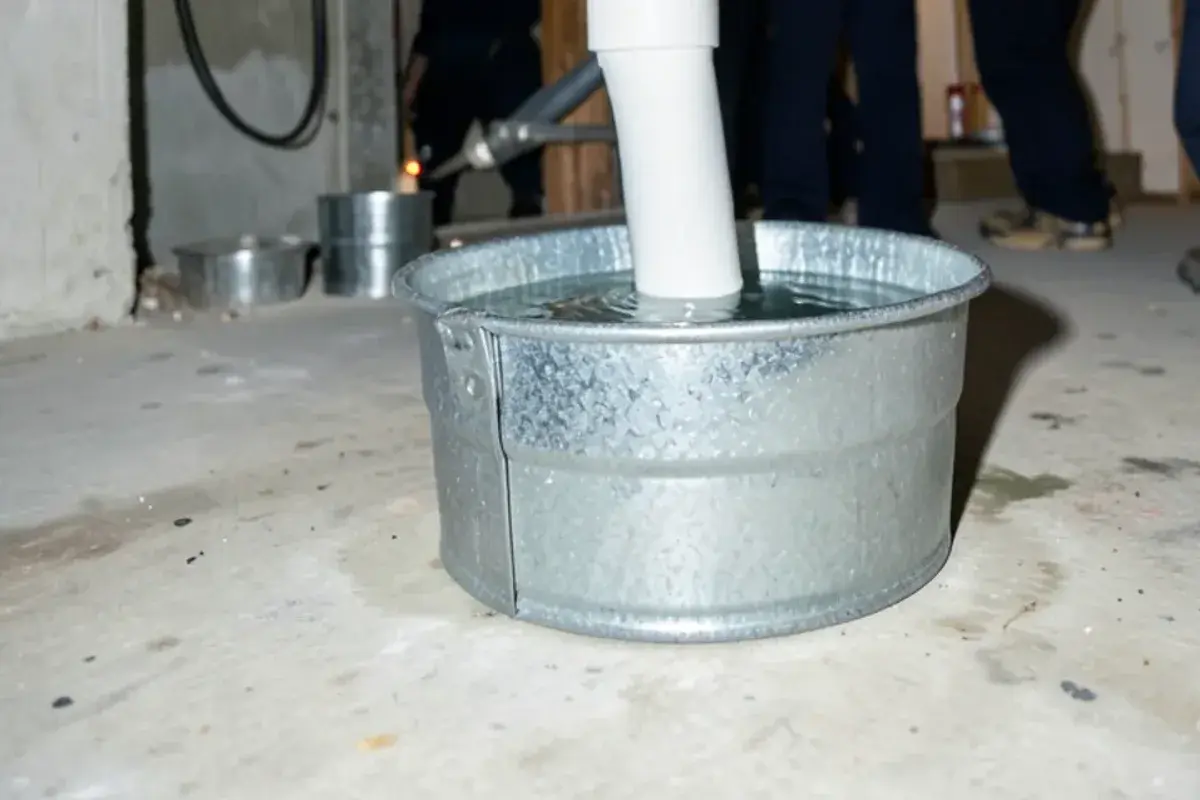
- Condensate lines. Check that pans and drains are clear and dry.
- Access and clearance. Make sure nothing is stored against equipment, and snow and ice are cleared from exhaust and intake openings in winter.
What belongs in the quarterly and seasonal service?
These tasks need a technician, tools and, for refrigerant work, EPA Section 608 certification:
| Interval | Task | Why |
|---|---|---|
| Spring, before cooling | Clean evaporator and condenser coils | Dirty coils reduce cooling and extend run time |
| Spring, before cooling | Check refrigerant level and electrical connections | Wrong charge lowers efficiency; loose wiring fails parts |
| Spring and fall | Inspect belts, bearings and motors | Prevents mid-season breakdowns |
| Fall, before heating | Inspect burners, heat exchangers and gas connections | ENERGY STAR lists these as safety and efficiency items |
| Fall, before heating | Test safety controls and ignition | Confirms heat starts, runs and shuts off correctly |
| Twice a year | Clean condensate drains and pans | Prevents water damage to tenant space |
| Twice a year | Verify controls and economizer operation, where installed | Keeps outside air and comfort in balance |
ENERGY STAR notes that airflow problems can reduce a system's efficiency by up to 15 percent, so blower and airflow checks belong on every visit.
Why keep records?
A log turns maintenance into information. When you note the date, the unit, what was checked and what was found, patterns show up: a unit whose belts keep failing, a drain that clogs every spring, a compressor that runs hotter each year.
Records also support replacement decisions. They show how many repairs a unit has had and when, which is the evidence you need to say a rooftop unit has reached the end of its service life. Ask any contractor you hire to leave a written report with each visit, or to send one after, and keep it with the building file.
Many managers also find that tenant complaints are easier to handle with a log. You can see whether a "no cooling" call is a pattern or a one-off.
“I manage a lot of properties and deal with contractors. I saw John had excellent reviews on the Internet.”
What should a unit inventory and service report contain?
A checklist only works if you know what it applies to. Start with an inventory, one row per piece of equipment, and keep it in the building file:
- Unit tag and location. A number you paint or label on the unit and use in every report.
- Make, model and serial number, with the install year if you know it.
- What it serves. Which suite, tenant, floor or common area depends on it.
- Fuel and refrigerant. Gas, electric or oil, and the refrigerant type shown on the data plate.
- Filter size and quantity. So that whoever changes them stocks the right ones.
- Access notes. Roof hatch, key location, ladder needs, and any tenant notice required before entry.
Then ask each visit to produce a report that lists the unit tag, the date, the tasks done, the readings taken, the parts replaced and the items that need follow-up with a priority. That is the practical heart of Standard 180: a record you can compare from one visit to the next.
Do refrigerant leak rules apply to your equipment?
Possibly, and the answer depends on the type of equipment. A January 2026 EPA fact sheet says that, beginning January 1, 2026, owners or operators and certified technicians must follow leak repair requirements for certain appliances with a charge of 15 pounds or more of an HFC refrigerant. For comfort cooling, the leak rate threshold that triggers repair is 10 percent. Leaks must be identified and repaired within 30 days of adding refrigerant to an appliance that exceeded the rate, and annual leak inspections follow until the appliance stays under the rate for a year.
The fact sheet also says that equipment in the residential and light commercial air conditioning and heat pump subsector is not covered. EPA describes that subsector as equipment cooling individual rooms, single-family homes and small commercial buildings. It adds that chillers and certain variable refrigerant flow systems fall under their own subsectors. EPA states that the fact sheet is informational and should not be relied on for compliance.
So a small building served by packaged rooftop units may be outside the rule, while a building with a chiller or a large VRF system may not be. Ask your contractor and your equipment manufacturer which category your units fall in, and keep the answer in your file.
What about boilers, water heaters and multi-unit buildings?
A checklist for a multi-unit property also covers the equipment that is not on the roof. Boilers and furnaces in apartments, common-area water heaters and makeup air units all belong in the inventory, with the same monthly and seasonal rhythm.
In a building with residents, carbon monoxide safety is part of maintenance. New York's Amanda's Law, in effect since February 22, 2010, requires carbon monoxide alarms in residences. Check with the municipal code office for what your buildings need, and test the alarms on the same schedule as the equipment. Our boiler replacement page explains the choices if an older boiler is the weak link.
What changes in a Western New York winter?
Buffalo averages about 6,466 heating degree days a year, according to NOAA normals, so heating equipment works hard and for a long season. Winter adds its own checks: snow around intake and exhaust openings, ice on roof units, and condensate lines that freeze where they run outside. Walk the roof access path after major storms, and do not send anyone onto a snowy roof without proper fall protection.
How we think about planned maintenance
For a small commercial building, we start with a walk-through: what equipment you have, how old it is, how it is used and what has gone wrong before. From that we can outline which tasks above apply, how often, and what a visit should record. We explain what we find at each visit and tell you plainly which items are urgent and which can wait.
We do not promise a program or contract here. We would rather talk through your building first, then say whether we are a good fit. Our commercial HVAC maintenance page explains how we approach scheduled work, and our rooftop unit service page covers packaged equipment.
When does maintenance become a replacement plan?
Maintenance records answer that question over time. A rooftop unit with a rising repair count, a failing compressor or a cracked heat exchanger needs a capital plan, not another patch. Our rooftop unit replacement planning guide covers how to budget for it before the failure arrives.
Put the checklist on a calendar
Make a list of your units: location, rough age, what each one serves and the last time anyone serviced it. Then call (321) 666-8870 and tell us about the building. If you are in or near West Seneca, we can talk through whether we are the right fit and, if something is already failing, about commercial HVAC repair.
Quick answers
What standard covers commercial HVAC maintenance?
ANSI/ASHRAE/ACCA Standard 180, which sets minimum requirements for inspecting and maintaining HVAC systems in commercial buildings. The Mechanical Code of New York State points to it for maintenance inspections. It is a baseline, and more specific rules may apply to your building, so read it alongside your insurer's and your lease's requirements.
How often should rooftop units be serviced?
At least twice a year, before the cooling season and before the heating season, with filter checks more often in between. Heavily used units, such as those serving kitchens or a retail floor with long hours, may need more. The right interval depends on the unit, how it is used and what the manufacturer recommends.
Can you service our building?
Our business profile lists residential services, so we look at light commercial and small property questions one building at a time. Call (321) 666-8870 and tell us the equipment, the building type and the location. We will say honestly whether we are the right fit, and if we are not, we will say so.
Sources
- ANSI/ASHRAE/ACCA Standard 180, Standard Practice for Inspection and Maintenance of Commercial Building HVAC Systems (ASHRAE)
- U.S. DOE Better Buildings Solution Center: ANSI/ASHRAE/ACCA Standard 180
- U.S. EPA, AIM Act leak repair requirements fact sheet (January 2026; 15 pound charge, 10 percent comfort cooling threshold, residential and light commercial exclusion)
- New York State DHSES, Amanda's Law (carbon monoxide alarms, effective February 22, 2010)
- ENERGY STAR, Maintenance Checklist for heating and cooling systems
- U.S. EPA, Section 608 refrigerant certification