
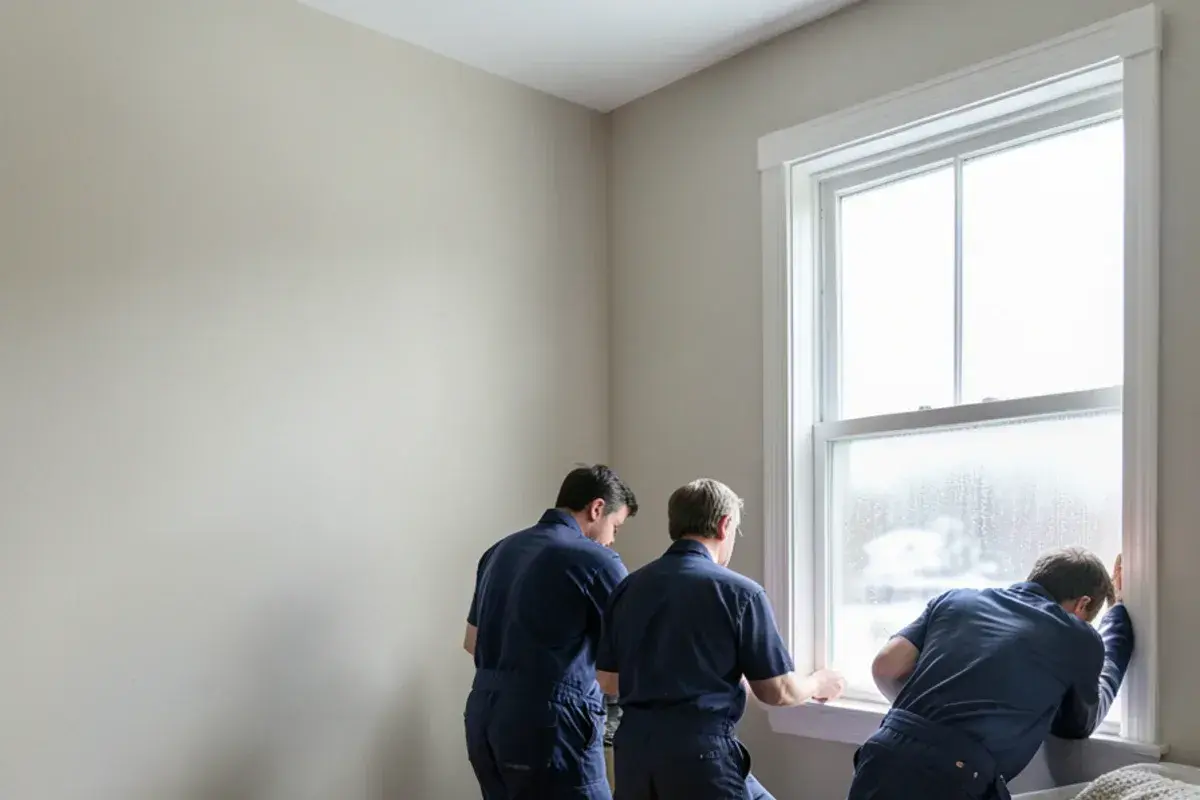
Whole Home Humidifiers in Buffalo, NY
A humidifier on your furnace, sized and set so winter air stops cracking lips and shocking fingers.
- 4.9★ on Google (57 reviews)
- Locally owned since 2011
- 15 years in Western New York
- No high-pressure sales
A whole home humidifier in Buffalo attaches to your furnace and adds moisture to the air that already moves through your ducts. It fixes the dry January problem: static shocks, cracked lips, dry nasal passages and wood floors that open at the seams. We size it to your house and set it so it does not overshoot.
The EPA suggests keeping indoor relative humidity below 60 percent, ideally between 30 and 50 percent. Cold air outdoors holds almost no water, so a heated Buffalo house in winter can sit well under that range without help.
What is included with whole home humidifiers
- A humidity reading to confirm that dryness is the problem
- A check that your system can take a humidifier: ducted forced air, plenum space, water and drain access
- Selection of a bypass, fan-powered or steam unit for your home
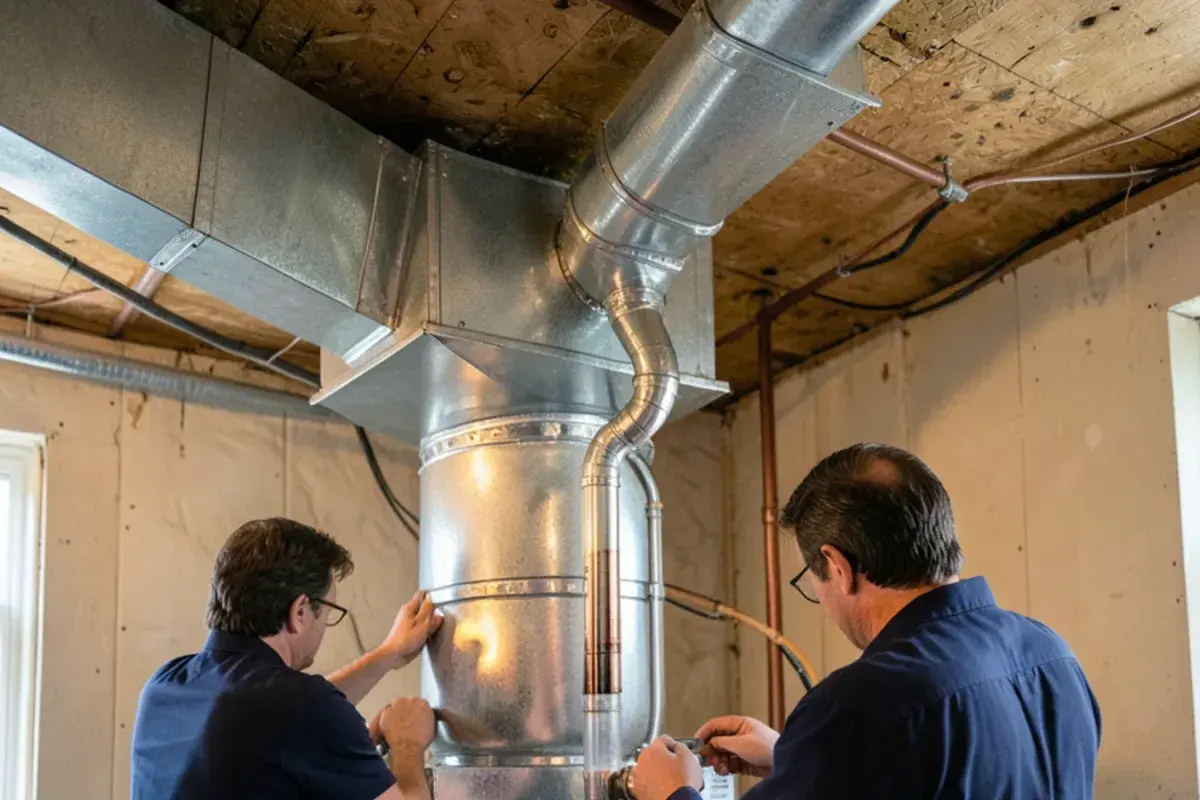
- Installation on the supply or return plenum with the water line and drain
- A humidistat or outdoor-temperature control so output follows the weather
- Setup instructions and a plan for pad replacement and seasonal shutoff
How do I know my home air is too dry?
- Static shocks on door handles and when you pet the dog.
- Dry, itchy skin and cracked lips from November through March.
- Hardwood floors with gaps that open in winter and close in summer.
- Wallpaper seams lifting, or cracks showing up in plaster.
- A cheap hygrometer reading below 30 percent on a cold day.
These signs are common in houses with forced-air furnaces, because furnace air has been heated without any added moisture. Boiler and radiator homes usually dry out less, but they still can in tight, newer builds.
Buffalo logs about 124 nights a year at or below 32°F and about 50 at or below 20°F, according to NOAA normals reported by MyWild.Report. The colder the outdoor air, the less moisture it holds, and warming it to room temperature leaves the relative humidity very low. The EPA says a small, inexpensive meter, about $10 to $50, will show where your house stands.

Which type of whole home humidifier is right for my furnace?
| Type | How it works | Trade-off |
|---|---|---|
| Bypass | Warm air is routed through a wet pad and returned to the system | Simple and common, with a pad that needs changing and a duct connection |
| Fan-powered | A small fan pushes air through the pad | Output is stronger, and it needs electrical power |
| Steam | Heats water into vapor and injects it into the duct | Strongest output and quickest response, with higher cost and electrical demand |
A whole-home unit only works on a ducted system. If your house heats with a boiler and radiators, a humidifier on the furnace is not an option, and we talk through other approaches. For houses with ducts, the mounting position, water supply and drain location also shape which model fits.
“He gave it a thorough look over and cleaned up a lighting element that appeared to have resolved the issue.”
How we install a whole home humidifier
- Confirm the need. We read humidity and look at where the moisture would go.
- Choose the position. The plenum needs clearance for the unit, and a nearby water line and drain.
- Cut in and mount. We cut the opening in the duct, mount the unit and connect the bypass or fan as needed.
- Plumb and wire. The saddle valve or tap supplies water, the drain runs to a safe spot, and the control is wired to the furnace.
- Set the control. We set the humidistat or outdoor-sensing control and explain how to adjust it as the weather changes.
Can a humidifier cause problems in a cold climate?
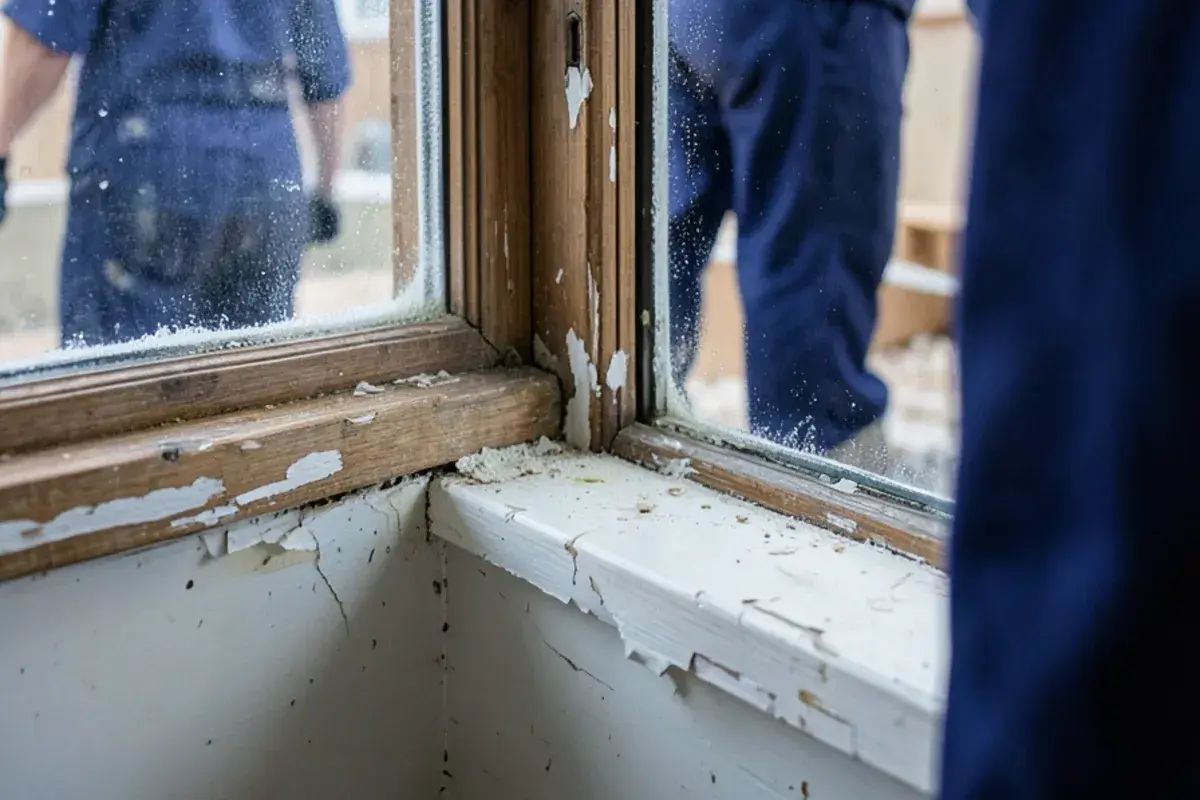
Yes, if it is set too high. Moisture will condense on cold surfaces such as single-pane windows, and the EPA lists condensation as a sign of high humidity. When temperatures drop to single digits, the right indoor humidity level for window comfort is lower than on a mild day. That is why outdoor-temperature control is worth having.
Damp basements, which are common in the Southtowns, are a different matter. If your basement already runs damp, adding humidity upstairs may not be the answer, and we would check that first. Humidifier pads and water pans also need regular cleaning so they do not grow slime or mineral scale.
The EPA names condensation on windows, walls or pipes as a sign of high humidity, and says to act quickly when you see it. Large expanses of cold glass show it first, which is why a control that follows outdoor temperature earns its place on a tall-windowed house.
Do humidifier installs fall under plumbing or code rules?
The EPA's 30 to 50 percent range is guidance, not a code requirement. The rules that matter are local. New York has no statewide HVAC contractor license, and Erie County Consumer Protection says licensing is set by each municipality.
A humidifier ties into a water line and a drain, and steam units add an electrical load. Erie County lists plumber licensing in Orchard Park, West Seneca, Clarence, Lackawanna, Blasdell, Depew, Williamsville and Grand Island, and electrician licensing in Orchard Park, Lackawanna and Grand Island. Ask your town or village what applies to the water and power connections, and tell us what they say so we can plan the job around it.
What does a whole home humidifier cost, and what upkeep does it need?
Mike M. told us he had numbers the same day and an install scheduled in a reasonable time, and that John worked around his schedule. We do not publish a price list. Cost depends on the type of unit, the plenum position, the water and drain run and the electrical connection. You get the figure before work begins.
For scale only, Carrier's cost guide, dated September 29, 2026, lists $400 to $800 installed for a bypass unit and $1,200 to $2,500 for a steam unit. That is a manufacturer's estimate, not our quote.
Three things move the number on your house. Larger homes need more gallons per day, steam units may need added electrical work, and every unit needs a water connection and a drain. The same page says bypass and fan-powered units may need a new water panel each year and steam units a replacement canister, without giving a price for either, so ask for the upkeep cost along with the quote.
- Replace the water pad once a season, or as the maker advises.
- Shut the water supply and clean the unit at the end of the heating season.
- Check the drain line for clogs, since a blocked drain leaks.
- Adjust the control when the weather turns colder.
- Call us for humidifier repair if you see water on the floor, a stuck valve or no output.
Why Vantage for whole home humidifiers
Quoted fast, scheduled around you
A reviewer who asked for humidifier quotes said we had numbers the same day and worked around his schedule. That is his experience, not a promise, but it is how we try to work.
Honest about fit
If your house heats with a boiler or your basement runs damp, we say so before selling you a unit, even when that means no sale.
Rated 4.9 on Google
Google lists 57 reviews and a 4.9 average as of October 2026. Customers describe a technician who explains each step and works around their schedule. See what people said.
Warranty. Humidifier warranties come from the manufacturer and differ by model, and pads and water panels are consumable parts. We go over what is covered, and what our own workmanship covers, before you approve the job.
Where we work. We install humidifiers from our Orchard Park base across the Southtowns and greater Buffalo, including Hamburg, West Seneca and Amherst. See every community on our list.
What customers said
“John and his crew were very nice, knowledgeable, and professional. They did a great job on my new furnace, AC unit, and air purifier.”
“We used Vantage twice this year, to replace our furnace and our AC. They were very responsive and professional, always returned communication, and worked with our schedule and our budget.”
Whole Home Humidifiers questions
What humidity level should I aim for in winter?
The EPA suggests staying below 60 percent, ideally between 30 and 50 percent. In a Buffalo winter, we set many systems toward the lower half of that range when temperatures are very cold, so windows do not fog or frost. A humidistat or outdoor-temperature control adjusts the output automatically as the weather changes.
Can you install a humidifier if my house has a boiler?
A furnace-mounted humidifier needs ducts. Radiator homes generally cannot use one. If you have a boiler plus a separate central air system, there may be ductwork that can carry moisture. Call us and describe the house, and we will tell you honestly whether a humidifier makes sense or not.
Will a humidifier cause mold?
Not if humidity stays in the EPA range and the unit is cleaned. Mold grows where moisture lingers, which happens at high settings or when pads and drains are neglected. We set the control for your home and explain the upkeep. A basement that already smells damp should be looked at first.
How often do humidifier pads need replacing?
Usually once per heating season, though the schedule depends on the model and on how hard your water is. A pad crusted with mineral scale moves less moisture and can restrict airflow. We tell you which pad your unit uses, and how to tell when it has run its course.
Do you repair humidifiers installed by another company?
Call us to confirm, since it depends on the unit and whether parts can be found. Water on the floor, a valve that sticks and a unit that runs without adding moisture are the usual calls. We check the water supply, drain, control and pad first, then quote the repair before touching it.
Where we handle whole home humidifiers
- HamburgLake Erie winters run long and dry indoors, though village boiler homes cannot take a furnace unit.
- West SenecaDamp creek-area basements come first, since extra moisture upstairs is the wrong fix there.
- AmherstLarge forced-air homes with long duct runs need output matched to the size of the house.
- LackawannaLakeside exposure dries ducted homes in winter, while boiler housing needs a different approach.
- Orchard ParkNewer forced-air and multi-zone homes tend to have the plenum space a humidifier needs.
- DepewMid-century houses with add-on ducts can carry humidity everywhere only if the runs reach every room.
- ClarenceTall glass in large custom homes fogs quickly if humidity is set too high for the weather.
- BlasdellCompact furnace closets in small village houses limit plenum space, so fit is measured first.
- WilliamsvillePlaster walls and old woodwork in historic houses show winter dryness as cracks and gaps.
- LancasterSubdivision furnaces nearing replacement age make a humidifier a question for the same visit.
More on whole home humidifiers
Related services
From the blog
Nearby service areas
Talk to the people who do the work
Talk with Vantage about whole home humidifiers.
- 4.9★ on Google (57 reviews)
- Locally owned since 2011
- 15 years in Western New York
- No high-pressure sales
Vantage Heating and Cooling · Orchard Park, NY · (321) 666-8870 · Mon–Fri 7:30 AM–5:00 PM · Sat–Sun closed