
Prevention Checklists
How Often Should You Change Your HVAC Filter?
By John Gach, owner of Vantage Heating and Cooling · Published · Updated
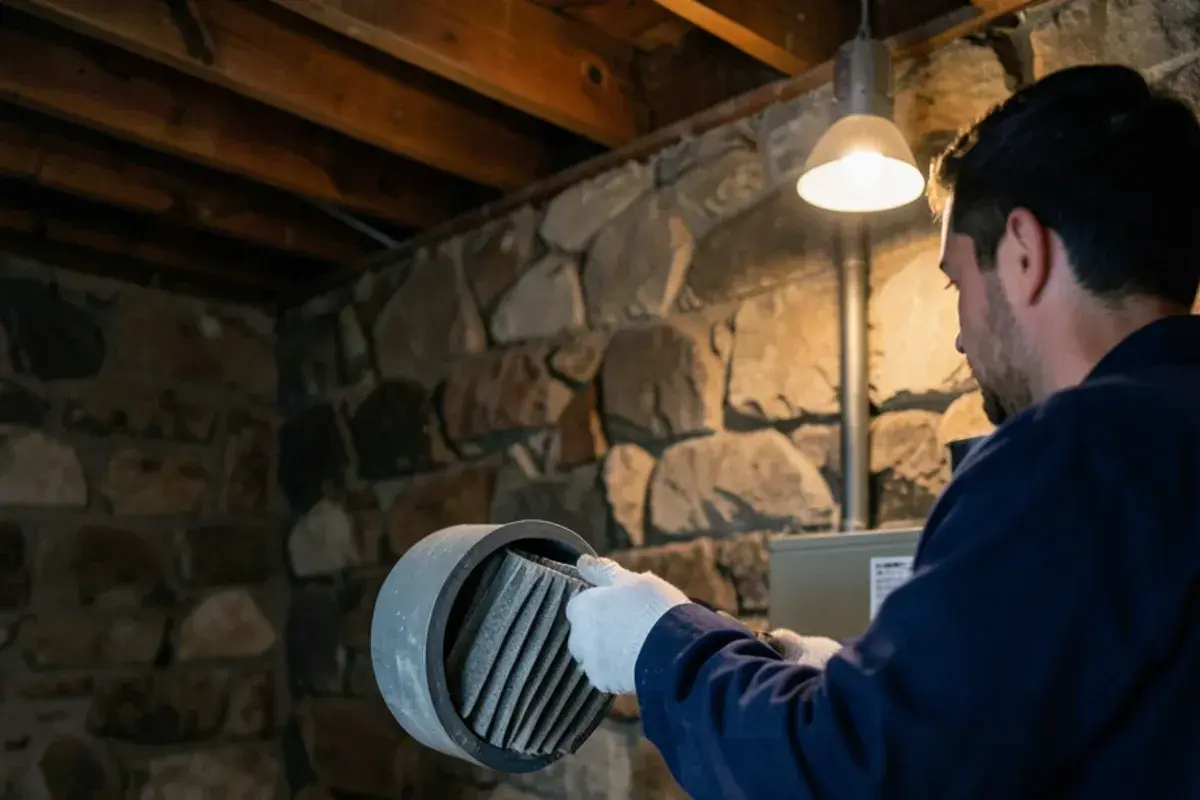
Check your HVAC filter every month, and change it whenever it looks dirty or at least every three months. That is the schedule ENERGY STAR recommends for central air conditioners, furnaces and heat pumps alike. In a Western New York house that runs the furnace for most of the year, the monthly look matters more than the calendar.
The rest of this guide covers what makes a filter clog faster, how to find the right size and rating, and how to change it correctly.
Why does the filter schedule matter?
The filter protects the blower, the coil and the heat exchanger from dust. When it clogs, air moves less freely through the system. ENERGY STAR notes that a dirty filter raises energy costs and can lead to early equipment failure.
Poor airflow also shows up in other ways: rooms that feel stuffy, an AC coil that freezes, or a furnace that shuts itself off on its high-limit safety control. A filter is the cheapest part of the system, and it is also the first thing we check on a service call.

What makes a filter clog faster?
The three-month rule is a ceiling. These conditions push you toward a monthly change:
| Condition | Why the filter loads faster |
|---|---|
| Pets that shed | Hair and dander fill pleats quickly |
| Long heating season | Buffalo averages about 6,466 heating degree days per NOAA, so the blower runs for months |
| Blower set to continuous "fan on" | Air moves through the filter all day |
| Renovation or sanding | Fine dust floods the return air |
| Smokers, candles or a wood stove | Soot and residue build up |
| Older home with leaky ducts or an unfinished basement | Return ducts pull in dust from wall cavities and floors |
If your filter looks dirty after a month, ENERGY STAR says to change it. A good test is to hold it up to a light. If you cannot see light through it, change it.
What size and MERV rating do you need?
The size is printed on the frame of the old filter, in inches, for example 16 by 25 by 1. Measure to confirm if the print has worn off. The thickness matters, since a 1-inch slot cannot take a 4-inch media filter.
MERV measures how well a filter catches particles. A higher number catches smaller ones, but the filter also adds resistance to the air. The Pacific Northwest National Laboratory notes that a filter with a higher MERV rating generally reduces airflow, and that how much depends on the blower and the filter. Check your equipment's manual or nameplate for the highest rating it allows.
Practical guidance:
- Do not jump to the densest filter available. A system that cannot pull enough air through it will run poorly.
- A thicker moderate-rated filter can be a better match than a thin, dense one.
- Ask us first if anyone in the house has allergies or asthma and you want better filtration. Whole-home options are covered on our air purifiers and filtration page.

Does a higher MERV rating always strain the blower?
Not always, and that is where the common advice gets too simple. The Pacific Northwest National Laboratory's guide to high-MERV filters says a high MERV rating does not by itself mean a higher pressure drop, because the filter's design matters as much as its rating. The same guide says a filter typically accounts for 20 to 50 percent of a system's total pressure drop, and that most residential systems run efficiently when total static pressure stays no higher than about 0.4 to 0.5 inches of water column.
That is why thickness matters. More pleat area lowers the resistance without changing the MERV number. PNNL's example is that a 4-inch-deep pleat has twice the surface area of a 2-inch pleat. For three MERV 7 filters from one manufacturer, it lists a 1-inch filter at 0.20 inches of water column, a 2-inch filter at 0.13, and a 4-inch filter at 0.12, all at the same airflow.
For ratings, the guide notes that ENERGY STAR requires MERV 6 or higher, and that EPA and ASHRAE recommend at least MERV 13 for managing virus concentrations in a home. Whether your blower can handle MERV 13 is the question to settle with the equipment manual or with us, not a number to guess.
Which filter type suits which house?
| Filter type | Best for | Watch for |
|---|---|---|
| Thin fiberglass panel | Basic dust protection for the blower | Catches little of the fine dust that people notice |
| Pleated, 1 inch | Most standard filter slots | Needs the monthly look; clogs faster in homes with pets |
| Pleated, 4 or 5 inch media | A cabinet built for it | Will not fit a 1-inch slot, so do not force one in |
| Washable | Homeowners who will clean it on schedule | Must dry fully before it goes back |
If you want better filtration than your slot allows, a deeper filter cabinet or a standalone air purifier can add it without choking the blower. Our air purifiers and filtration page covers the options.
What are the signs a filter is overdue?
Check for these before the monthly look turns into a habit:
- Rooms that used to be comfortable now feel stuffy or uneven.
- The AC coil ices up or the furnace shuts off before the house is warm.
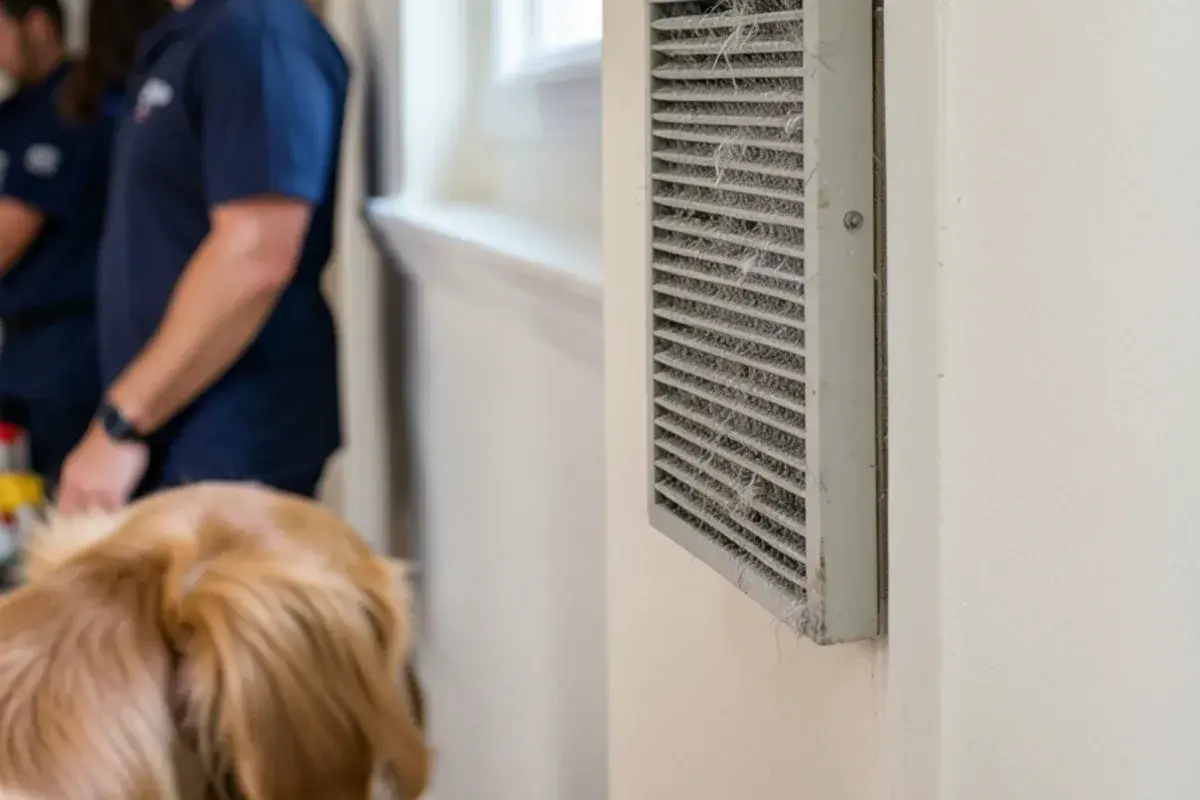
- Dust gathers on the return grille faster than it used to.
- The blower sounds strained or louder.
- Your energy bill rises with no change in the weather.
None of those proves the filter is the problem, but a clean filter is the first and cheapest test. If the symptoms stay after a change, a technician should look at the blower, the coil and the ducts.
Do all homes have a filter to change?
No. A house heated by a boiler and radiators, with no central air, may have no ducted filter at all. A ductless mini split has its own washable filters inside each indoor head, and ENERGY STAR advises cleaning them when they look dirty. A house with both a boiler and central air has a filter at the air handler, and it matters during the cooling season.
If you are not sure what your house has, look at the return grille and at the furnace or air handler cabinet. A thin slot with a cover is almost always the filter. If you find nothing, ask us at your next furnace maintenance visit.
How do you change the filter?
It takes about two minutes:
- Turn the system off at the thermostat.
- Slide the old filter out, and note which way the arrow points.
- Wipe any dust from the slot with a dry cloth.
- Slide the new filter in with the arrow pointing toward the blower, in the direction the air flows.
- Close the cover firmly. A gap lets unfiltered air in around the filter.
- Write the date on the frame in marker.
Some homes have the filter at the return grille on a wall or ceiling, not at the furnace. If you cannot find it, look at the large grille on the wall or ceiling and check behind it.
How we think about filters
When a call comes in about weak airflow or a frozen coil, the filter is the first thing we look at. It takes a minute, and it saves you a bill if the answer is that simple. We also look at whether the filter is the right size, because gaps around an undersized filter let dust past it.
Older homes, like much of the housing in Lackawanna, often have unfinished basements and leaky return ducts. A dusty return there can mean the system is pulling basement air, and a filter helps but sealing the leak helps more. Your yearly furnace maintenance visit and spring AC maintenance visit are good times to ask us about it.
Set a filter reminder today
Put a monthly reminder on your phone, and check the filter the same day each month. If you are in Lackawanna or nearby and airflow still feels weak with a clean filter, call us at (321) 666-8870. Our guide to the spring AC maintenance checklist and the fall furnace checklist cover the rest of the seasonal routine.
Quick answers
Can I wait longer than three months to change the filter?
ENERGY STAR treats three months as the outer limit, and says to change the filter sooner if it looks dirty. A filter that stays in too long restricts airflow, which forces the blower to work harder and can lead to early failure. In a long Buffalo heating season, a dirty filter shows up in your energy bill first.
Is a higher MERV filter always better?
No. A higher MERV rating traps smaller particles but adds resistance to airflow, and some furnaces and air handlers cannot move enough air through a dense filter. Check your equipment manual for the highest rating it allows. A thicker filter at a moderate rating can be a better fit than a thin, dense one.
Do washable filters need replacing?
Not often, but they need cleaning and complete drying on a regular schedule, and they do not catch fine particles as well as a pleated filter. If you use one, rinse it on the same monthly check you would use for a disposable filter, and let it dry fully before it goes back into the system.
Sources
- ENERGY STAR, Heating and Cooling: check filters monthly, replace at least every three months
- ENERGY STAR, Maintenance Checklist for heating and cooling systems
- PNNL Building America Solution Center, high-MERV filters (pressure drop 20-50 percent of system; 0.4 to 0.5 in. w.c.; pleat area; ENERGY STAR MERV 6; EPA and ASHRAE MERV 13)
- ENERGY STAR, Ductless Heating and Cooling (clean filters when visibly dirty)
- NOAA 1991-2020 climate normals for Buffalo, NY: heating degree days