
Prevention Checklists
Spring AC Maintenance Checklist for Homeowners
By John Gach, owner of Vantage Heating and Cooling · Published · Updated
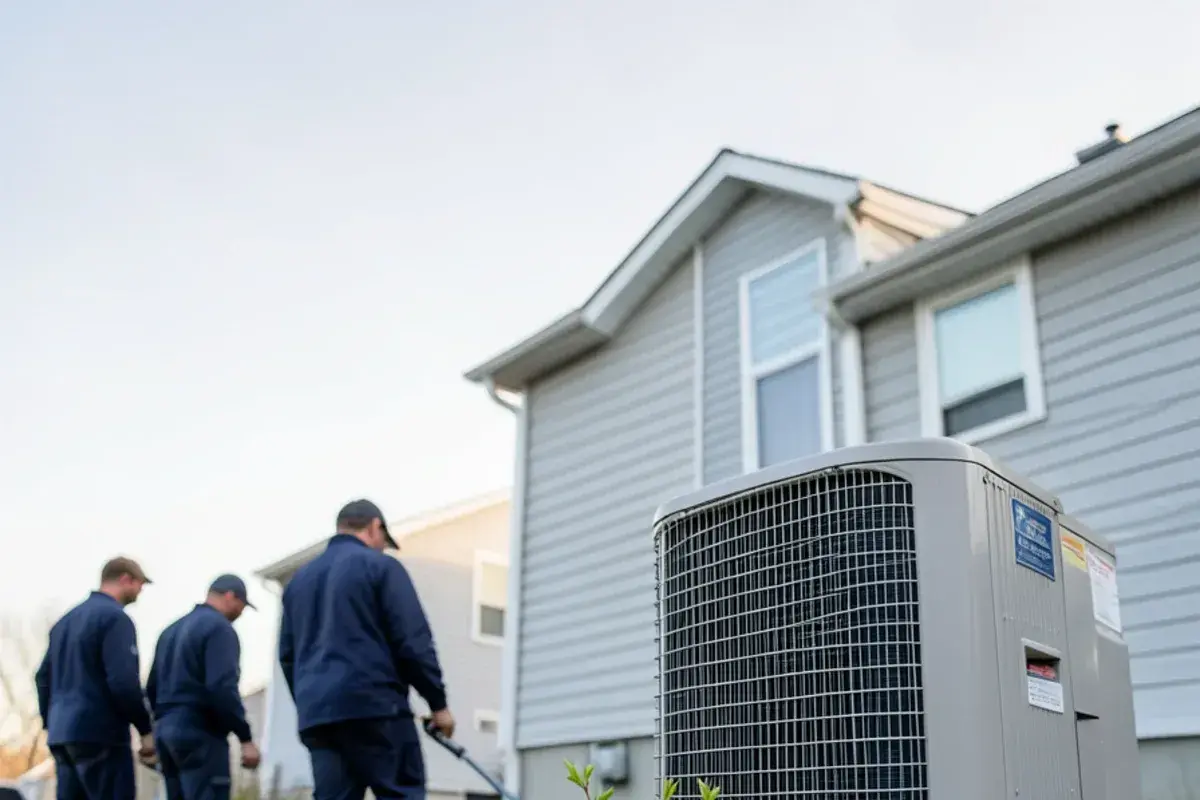
This AC maintenance checklist covers the spring steps a homeowner can do in an afternoon: the filter, the outdoor unit, the drain, the thermostat and a short test run. A technician should handle the rest. Do yours in late April or May, before the first hot week fills every repair schedule.
ENERGY STAR advises scheduling cooling check-ups in spring and heating check-ups in fall. The list below gets your system ready for that visit and catches the easy problems on your own.
Why does spring matter in Western New York?
Your air conditioner sits idle for about seven months. Buffalo's heating season runs roughly from late September to the end of May, according to NOAA normals reported by MyWild.Report, so the unit has spent the winter under snow, ice and wind-driven debris. Mice sometimes nest in the cabinet, and wet leaves pack the coil.
The cooling season is short, with about 2.1 days a year above 90°F by University of Michigan GLISA figures. That makes each hot day count, and a failure on one of them is the kind of call we would like you to avoid.
What can you do yourself before the season starts?
Work in this order:
- Switch off power to the outdoor unit at the disconnect box near it, before touching anything.
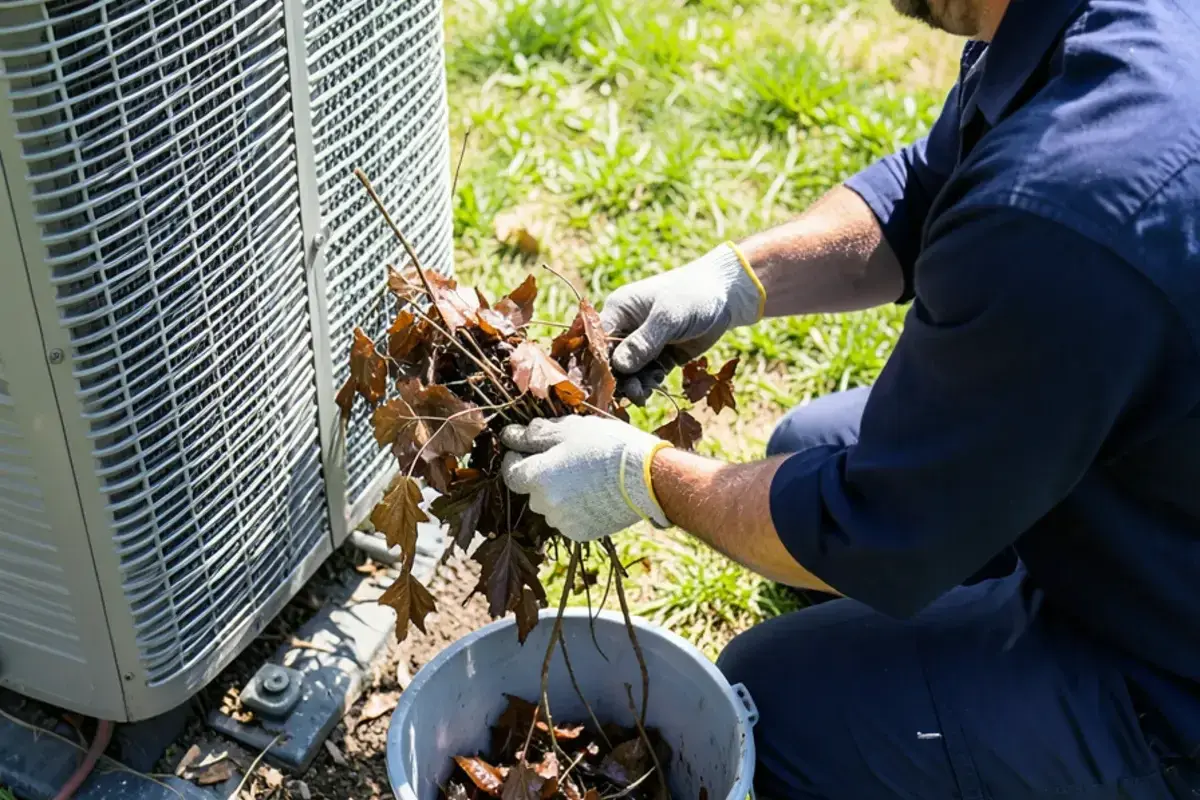
- Clear debris. Remove leaves, sticks and winter litter from around and on top of the condenser. Leave a couple of feet of clear space on all sides, or whatever your manual calls for.
- Trim plants back from the unit so air can move through the coil.
- Look at the fins. Gently straighten any bent aluminum fins with a fin comb. The U.S. Department of Energy suggests checking the evaporator coil each year as well, which is an indoor job for a technician.
- Rinse the coil with a garden hose on a soft spray. No pressure washer.
- Check the pad. The unit should sit level. A tilted pad after frost heave can strain the lines.
What should you do about the filter?
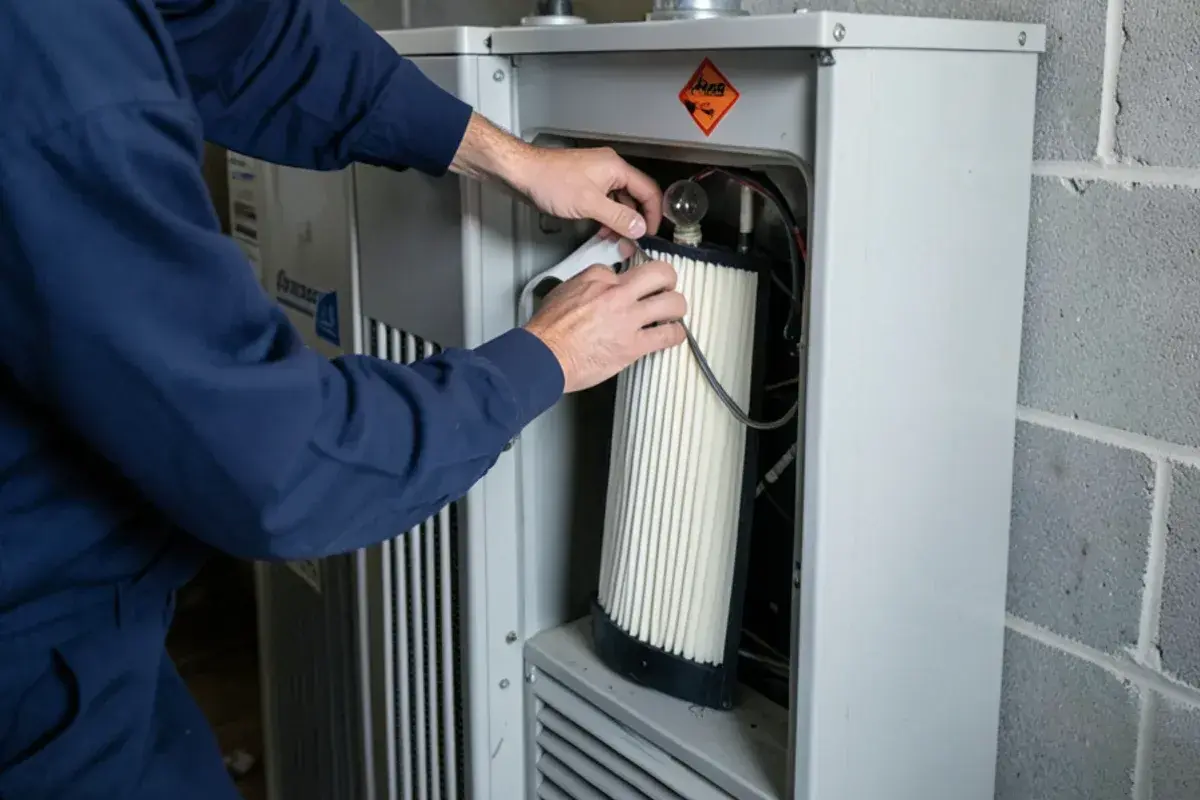
ENERGY STAR says to inspect, clean or change the filter about once a month during the cooling season, and to change it if it looks dirty. At the very least, replace it every three months. A dirty filter raises energy costs and can shorten equipment life.
If you ran the furnace all winter, the filter is probably dirty. Put in a fresh one before the first cooling run. See our guide on how often to change your HVAC filter for what changes the schedule.
What should you check indoors?
The indoor half of the system gets less attention than the condenser, and it is where water damage starts. Spend ten minutes on these:
- Supply and return grilles. Move furniture, rugs and curtains away from them. A blocked return starves the blower, and ENERGY STAR notes that airflow problems can reduce a system's efficiency by up to 15 percent.
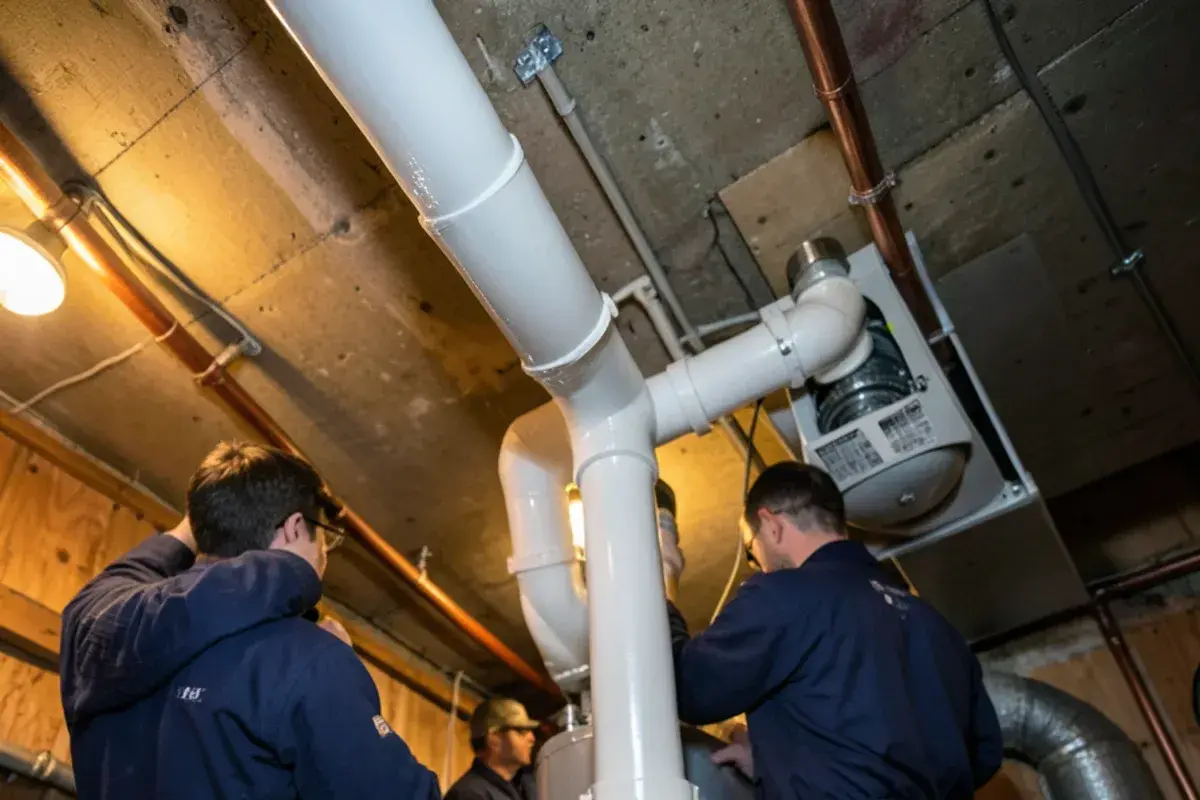
- The condensate drain. Look for a white PVC line leaving the indoor coil cabinet, and look at the floor beneath it for stains or damp. ENERGY STAR warns that a plugged drain can cause water damage in the house. If it is wet, stop and call. Do not pour chemicals into it.
- The cabinet and the filter slot. The cabinet should be dry, with the filter seated and the door closed fully. A missing seal pulls unfiltered air past the coil.
- The thermostat. Confirm it is set to cool, that the schedule matches how you live, and that the batteries are fresh.
Do not remove the access panels on the outdoor unit. The electrical section holds capacitors that can retain a charge after the power is off, and that part belongs to a technician.
When in spring should each task happen?
Weather in Western New York does not follow the calendar, so tie each step to the conditions, not the date.
| When | Task | Why then |
|---|---|---|
| After the last hard freeze | Uncover and clear the condenser, trim plants | Wet leaves and ice are gone, and the unit is easy to reach |
| Same weekend | Replace the filter, clear grilles, check the drain area | These are indoor jobs and do not depend on the weather |
| First mild stretch | Test run, as described below | Your owner's manual lists a minimum outdoor temperature for cooling, so wait for a day above it |
| Before the first hot week | Book the technician visit if you have not yet | Calendars fill quickly once the weather turns |
If your system has run for years without a tune-up, do not wait for a perfect checklist. A single visit that cleans the coils and checks the drain is worth more than a perfect set of homeowner steps.
How do you test the system?
Wait for a day above 65 degrees, restore power, and set the thermostat to cool and a few degrees below room temperature. Then check:
- Does the outdoor fan start within a minute or two?
- Does air from the vents feel cool after about ten minutes?
- Is there any water near the indoor unit or at the drain?
- Any new noise or smell? Grinding, squealing, a burning smell or ice on the lines mean shut it off and call.
Write down the date and what you observed. If the system behaves differently in July, that note tells the technician what changed.
Check the thermostat, too. If it has dead batteries, drifts from the room temperature or does not hold a schedule, a new one is a small job that is worth doing before summer, not during a heat wave.
What does a technician check that you cannot?
ENERGY STAR lists what a contractor's annual check-up should include, and most of it needs tools and training:
| Task | Why it matters |
|---|---|
| Clean evaporator and condenser coils | Dirty coils reduce cooling and make the system run longer |
| Check refrigerant level | Too much or too little lowers efficiency |
| Tighten electrical connections, measure voltage and current | Prevents failures in motors and capacitors |
| Lubricate moving parts | Reduces motor friction and electric use |
| Inspect the condensate drain | A clog can cause water damage and humidity problems |
| Clean and adjust the blower | ENERGY STAR notes airflow problems can cut efficiency by up to 15 percent |
| Check controls and the starting cycle | Confirms the system starts, runs and stops properly |
Refrigerant work requires EPA Section 608 certification, which is one more reason to leave that part to a technician.
What should you keep on file for the system?
A short record makes every future visit faster and every decision clearer. Keep these in one place, such as a folder or a note on your phone:
- The model and serial numbers from the outdoor unit and the indoor coil.
- The filter size and the date you last changed it.
- The dates and findings of each tune-up or repair.
- The location of the outdoor disconnect and the breaker.
When a unit gets old, these notes also support the repair-or-replace question. Our guide on when an old AC is not worth fixing uses the same facts.
What if you have a ductless system?
The steps are similar, with different parts. ENERGY STAR advises cleaning the filters of a mini split when they look dirty, and the outdoor unit still needs clear space on every side. The indoor head hides its coil and drain behind the cover, so a technician should handle anything beyond filters. See our ductless mini split page for what we cover.
What we look for on a spring visit
A tune-up should find things before they fail, and then tell you what it found in plain terms. We check the parts above, show you anything worn, and tell you which items are urgent and which can wait. That keeps the visit useful instead of a sales call.
Tonawanda has plenty of mid-century tract houses, where ducts are often tight on capacity. In homes like that, we also look at airflow, since a clean system on weak airflow still struggles. Our AC maintenance page describes what a visit covers.
When should you call instead of waiting?
Call if the system will not start, blows warm air, ices up, leaks, or runs constantly without cooling. Those are repair symptoms, not maintenance ones. If you are in Tonawanda or the surrounding area, call (321) 666-8870. We can book your tune-up or look at AC repair if something is already wrong.
Quick answers
When should I do my spring AC maintenance?
Late April through May, before the first warm stretch. Western New York can swing from snow to 80 degrees fast, and a technician's calendar fills once that happens. Do the homeowner steps yourself first, run the system for a short test, and book a tune-up if anything sounds, smells or performs wrong.
Can I hose off my outdoor AC unit?
Yes, gently, with the power switched off at the disconnect. Use a garden hose on a soft spray, never a pressure washer, and spray from the inside out if you can, or from the outside in if not. A hard spray bends the aluminum fins, which cuts airflow and makes the unit work harder.
How often should the AC filter be changed?
ENERGY STAR says to check it about once a month and to change it if it looks dirty. At a minimum, replace it every three months while the system is in use. A dirty filter raises energy costs and can lead to early equipment failure, so it is the cheapest habit on this list.
Sources
- MyWild.Report, Buffalo climate summary based on NOAA normals: heating season dates
- Great Lakes Integrated Sciences and Assessments, University of Michigan: days above 90°F
- ENERGY STAR, Maintenance Checklist (airflow problems can cut efficiency by up to 15 percent; plugged drain can cause water damage)
- ENERGY STAR, Ductless Heating and Cooling (clean mini split filters when visibly dirty)
- ENERGY STAR, Heating and Cooling: annual tune-ups and filters
- U.S. Department of Energy, Home Cooling 101: coils and fins