
Comparison Guides
Repair or Replace: When an Old AC Is Not Worth Fixing
By John Gach, owner of Vantage Heating and Cooling · Published · Updated
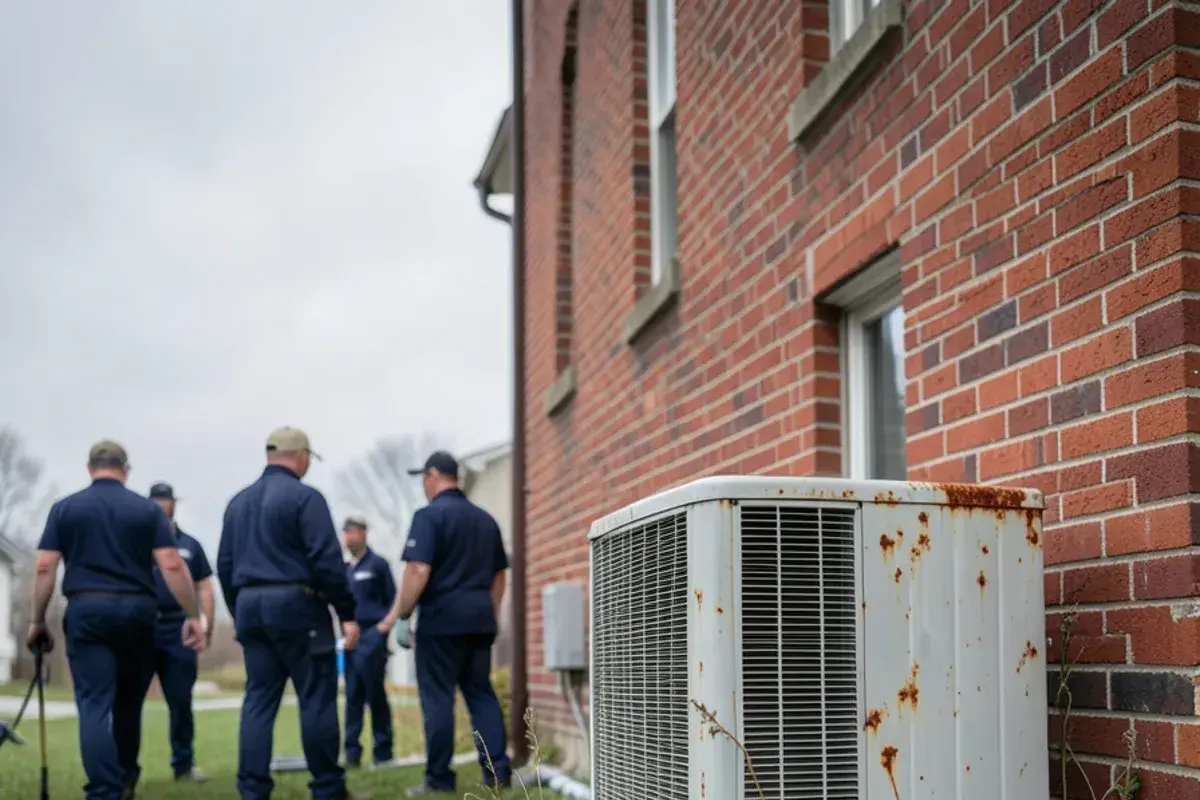
Repair or replace an AC by weighing three things: the system's age, what the repair costs next to a new system, and whether the same kind of failure is likely to come back. A young unit with a cheap part failure should be fixed. An old unit with a failed compressor usually should not.
We would rather you make that call with real numbers than with a guess. Here is how to think it through before anyone gives you a price.
How old is too old for an air conditioner?
ENERGY STAR says that if heating and cooling equipment is more than 10 years old, or is not keeping your house comfortable, a professional should evaluate it. That is a trigger to look, not a deadline to replace.
Age matters because parts wear together. A 14-year-old unit that needs a fan motor probably has a capacitor, contactor and coil of the same age. Fixing one weak link often shows you the next one a month later.
Buffalo gives air conditioners an easier life than most of the country. The Great Lakes Integrated Sciences and Assessments program at the University of Michigan puts Buffalo at roughly 2.1 days a year above 90°F, so many units run fewer hours than the same model would farther south. That is one reason we still see healthy systems past the 15-year mark.
What should the repair cost compare with?
Compare the repair to the cost of replacing the whole system, and look at what else is likely to fail. One rule of thumb you will see online multiplies the system's age by the repair estimate and compares the result with $5,000. It is a screening tool, not a verdict, and it ignores how reliable the unit has been.
A better habit is to ask for both prices at the same visit, then ask how many years of reliable service the repair realistically buys.
| Situation | Usually leans toward |
|---|---|
| Under 10 years old, small part failure | Repair |
| 10 to 15 years old, reliable until now, inexpensive part | Repair |
| Over 15 years old, second major repair in two summers | Replace |
| Compressor failure on an older system | Replace |
| Leaking evaporator or condenser coil | Often replace |
| Cooling unevenly because the system was never sized well | Replace, with a proper load calculation |
What does a replacement cost, and how do you read an estimate?
Vantage publishes no price list, so treat any number here as a benchmark, not our quote. HVAC.com's 2025 cost guide puts a typical central air installation at about $5,750 for a 3-ton unit in a 2,000-square-foot home, with most jobs between $3,300 and $7,800. Older, tighter Buffalo homes with attic air handlers or long refrigerant runs can land outside that band. A figure from a national guide is a way to spot a quote that is wildly off, not a way to budget.
What moves a real estimate is a short list of variables:
- Condenser only or the full system. Replacing the outdoor unit without the indoor coil can leave mismatched parts, and the efficiency rating only applies to a matched set.
- Staging. Single-stage, two-stage and variable-speed compressors sit at different price points and run differently on a humid August day.
- Line set and pad. Existing refrigerant lines in good shape can sometimes be reused. Lines that are kinked, undersized or buried in a wall may not be.
- Ductwork. Sealing and insulating ducts can lift a system's efficiency by as much as 20 percent, according to ENERGY STAR. A new condenser on leaky ducts spends part of that gain.
- Permit and electrical. A disconnect, a whip or a breaker that no longer meets code can add to the job.
Ask that the estimate lists the matched indoor and outdoor model numbers, the refrigerant type and what happens to the old unit.
Does the refrigerant in an old unit change the decision?
It can. The EPA ended production and import of R-22, the refrigerant in most residential air conditioners built before 2010, in 2020. Technicians can still service R-22 equipment, but the supply is reclaimed or stockpiled, and a refrigerant repair on that kind of system gets harder to justify each year.
Look at the data plate on the condenser. It lists the model, the serial number and the refrigerant type. If it says R-22 and the unit is leaking, the repair-versus-replace question is mostly answered. Handling any refrigerant requires EPA Section 608 certification, so a technician who finds a leak should locate it, not keep topping off the charge.
What is a replacement likely to save on the electric bill?
A modest amount, in most Buffalo homes. ENERGY STAR estimates that replacing old equipment with certified equipment can cut annual energy bills by nearly $140, depending on location. The federal minimum for a new split-system central air conditioner in the northern states is 13.4 SEER2, according to the Department of Energy's 2023 standards guidance, so almost any new unit is more efficient than one built twenty years ago.
ENERGY STAR also warns that improper installation can reduce a system's efficiency by up to 30 percent. A well-installed average unit usually beats a poorly installed premium one. That is why we ask about the line set, the airflow and the sizing before we talk about SEER2 numbers.
Which AC repairs are worth making?
Repairs that restore a sound system are usually worth it. These are the common ones:
- Capacitor or contactor. Small electrical parts that fail often and cost little compared with the system.
- Fan motors. Reasonable on a unit that is otherwise healthy.
- Clogged condensate drain. A cleaning, not a replacement, and it prevents water damage.
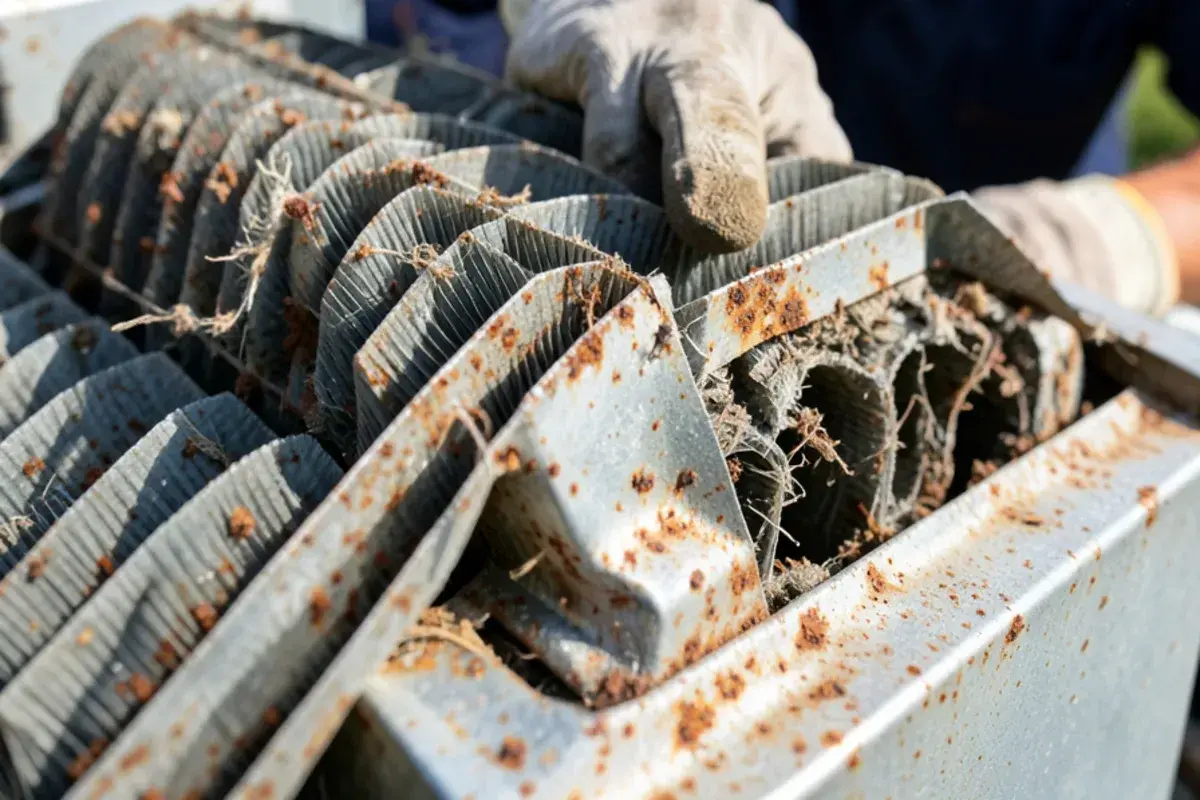
- Dirty or bent coils. Cleaning and straightening fins restores airflow.
Repairs that tend to signal the end of the road are a failed compressor, a leaking coil, or a system that has lost refrigerant more than once. Handling refrigerant legally requires EPA Section 608 certification, so be wary of anyone who offers to keep topping off a leaking system without finding the leak.
How we make the repair-or-replace call
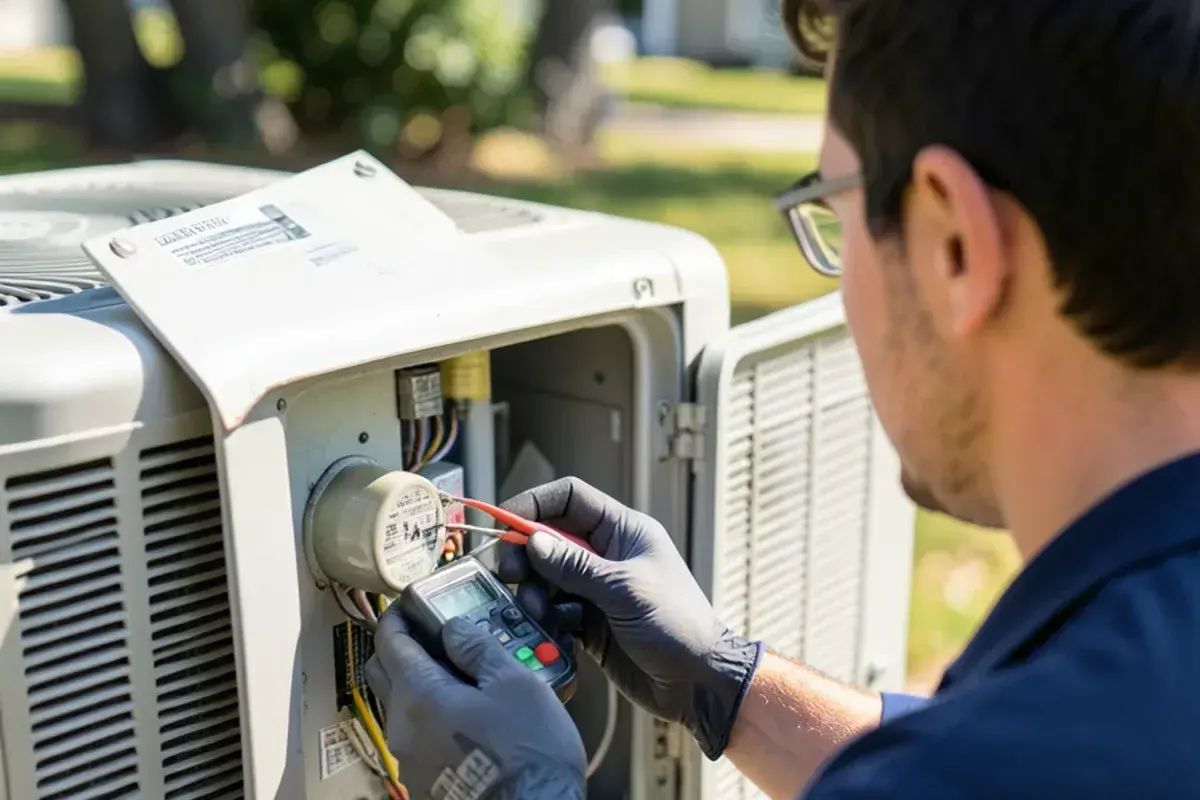
When we look at an old air conditioner, we want three facts before talking price: what failed, what else on the unit shows wear, and whether the system ever cooled the house properly. A unit that never kept up will not be fixed by a new motor.
We then put the repair price and the replacement price side by side and explain the gap. If a repair makes sense, we say so, even though it is the smaller job. If it does not, we show you the problem on the unit so the recommendation is not just our word. Customers tell us in their Google reviews that the explanation is what they remember, and we want that to be true here too.
If you do replace, the system should be sized from a load calculation, not by matching the old tonnage. Old tonnage was often a guess, and many homes have had insulation or windows changed since. Our AC replacement page covers what that process involves.
What should you gather before the technician arrives?
A short list saves time at the visit and keeps the decision grounded in facts.
- The data plate. Photograph the model number, serial number and refrigerant type on the outdoor unit. The serial number usually reveals the build year.
- Repair history. Note what failed in the last three summers, and roughly when.
- Comfort problems. Write down which rooms run warm, whether the system short cycles, and whether it struggles on humid days.
- Your furnace or air handler age. The indoor coil lives there, so the two ages matter together.
- Plans for the house. A planned addition, window replacement or insulation upgrade changes the load, and therefore the size of the right system.
Timing matters too. Buffalo's cooling season is short, so the cleanest time to replace an AC is in May or in early fall, when you are not up against a hot week. Deciding in the middle of a hot week limits your options to whatever is practical that day.
What should you ask before deciding?
Ask these at the visit, whoever you call:
- What exactly failed, and can you show me?
- What is the repair price, and what is the replacement price?
- What else on this unit is near the end of its life?
- If I repair it, what is the realistic risk of another failure this summer?
- If I replace it, will you size the new system from a load calculation?
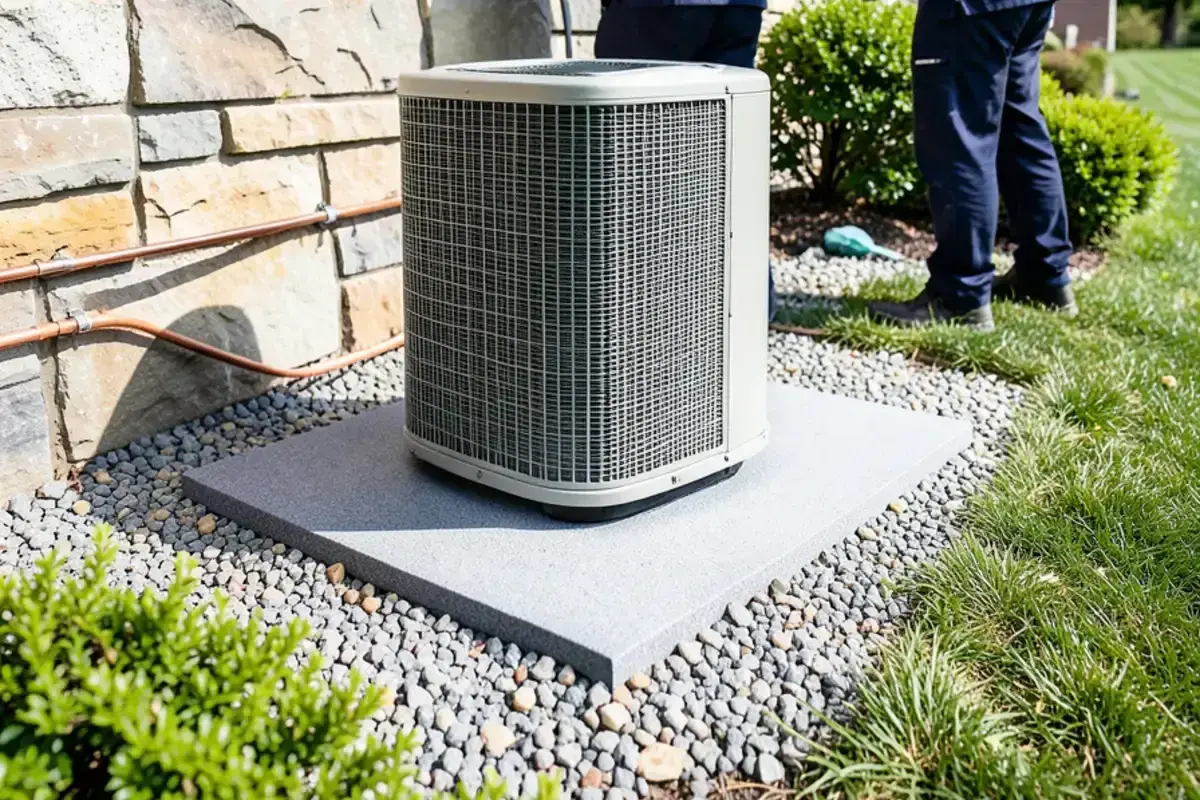
A tune-up each spring catches weak parts before the first hot week, and it is the cheapest way to avoid a forced decision in July. See AC maintenance for what a visit covers.
Ready to decide?
Start with the repair price. Then ask for the replacement price while the technician is still there. If you are in Orchard Park, Hamburg or the surrounding Southtowns, call us about AC repair at (321) 666-8870 and we will lay both options out plainly. Our office hours are Monday through Friday, 7:30 AM to 5:00 PM, and you can leave a message outside those hours.
Quick answers
Is it worth repairing a 15-year-old air conditioner?
Sometimes, if the repair is small and the unit has been reliable. A capacitor or contactor on a 15-year-old system is a reasonable fix. A failed compressor or a leaking coil on the same unit usually is not, because the next failure is likely close behind. Ask for the repair price and the replacement price together.
Does a newer air conditioner really lower the electric bill?
Usually somewhat, and the amount depends on how old the old unit is and how often it runs. Buffalo has a short cooling season, so savings accumulate slowly. Treat efficiency as a tiebreaker, not the main reason, unless the old system is also failing or short of capacity.
Should I replace the furnace at the same time as the AC?
Only if the furnace is also near the end of its life. The indoor coil sits on top of the furnace or air handler, so the two share ductwork and airflow, and a matched pair is simpler to size. If the furnace is young and healthy, replacing just the outdoor unit and coil is a normal job.
Should I replace an air conditioner that still runs R-22 refrigerant?
Usually yes, if it needs any refrigerant work. The EPA ended R-22 production and import in 2020, so the supply left for servicing is reclaimed or stockpiled. If the system runs fine and a leak is not the problem, you can keep it going, but plan the replacement instead of waiting for a July failure. Check the data plate to confirm the refrigerant.
Sources
- ENERGY STAR, Heating and Cooling: yearly tune-ups and equipment over 10 years old
- Great Lakes Integrated Sciences and Assessments, University of Michigan: days above 90°F in Buffalo
- U.S. EPA, Section 608 refrigerant certification
- U.S. EPA, Phaseout of Class II ozone-depleting substances (R-22 production and import ended 2020)
- HVAC.com, The Cost of a New Central Air Conditioner (March 1, 2025)
- U.S. Department of Energy, 2023 central air conditioner standards FAQ (13.4 SEER2 northern region)