
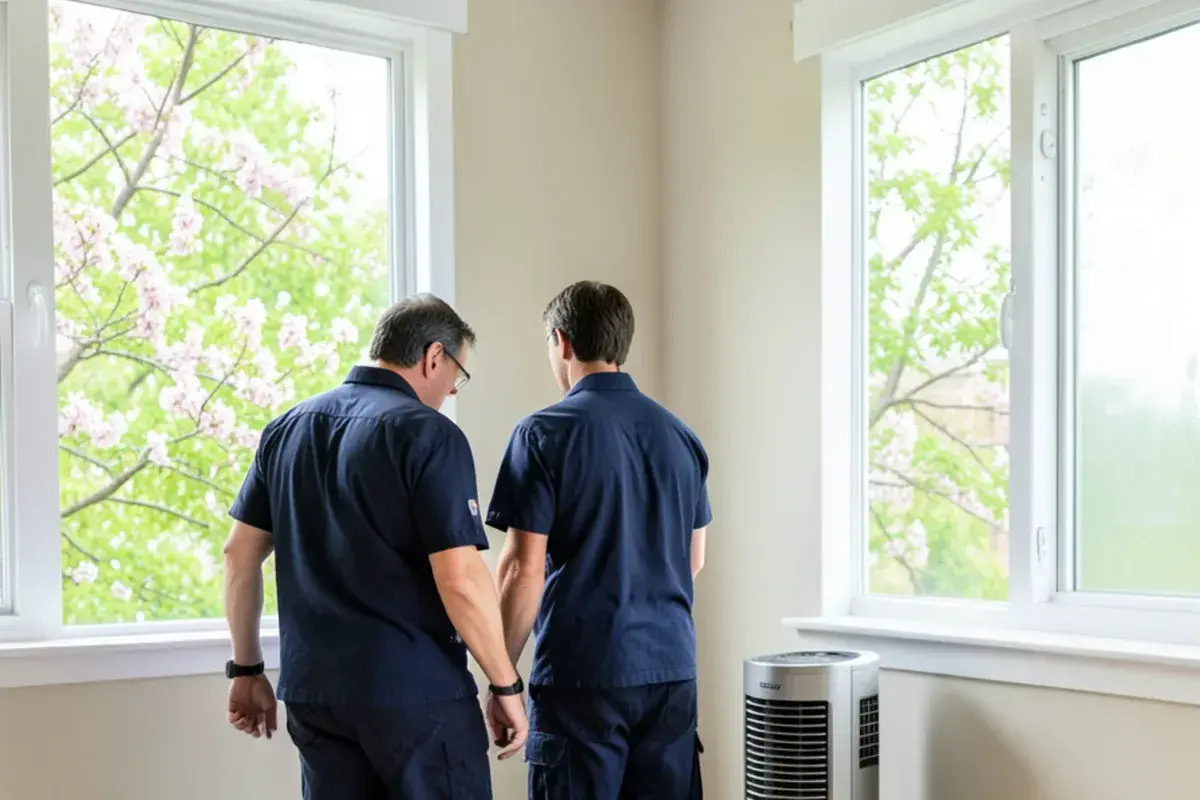
Air Purifiers and Filtration in Buffalo, NY
Filtration matched to your blower and your home, so the air gets cleaner without starving the system.
- 4.9★ on Google (57 reviews)
- Locally owned since 2011
- 15 years in Western New York
- No high-pressure sales
Air purifiers and filtration in Buffalo come down to a choice between a better filter in your existing system, a whole-home purifier added to it, or a portable cleaner for one room. The right answer depends on your blower, your returns and what you are trying to catch.
The EPA recommends a furnace filter rated MERV 13, or the highest rating your system can handle. Whether yours can take one is a measurable question, and we answer it before you buy anything. Plenty of older Buffalo houses have returns too small for a dense filter.
What is included with air purifiers and filtration
- A check of your filter cabinet, return size and blower for how much resistance they can take
- Recommendations among media filters, whole-home purifiers and portable cleaners, with the trade-offs
- Installation of a media filter cabinet or whole-home unit at the furnace or air handler
- Wiring and a condensate or power connection where the unit needs one
- Airflow checks after the install, to confirm the system still moves air properly
- A walkthrough of how to maintain it and when to replace parts
What are the options for cleaner air at home?
| Option | What it does | Watch for |
|---|---|---|
| Upgraded pleated filter | Catches more fine particles than a basic filter | A dense filter can restrict airflow if the return is small |
| Deep media filter cabinet | Larger filter surface area with less airflow resistance | Needs space at the furnace and a new cabinet |
| Whole-home purifier on the ductwork | Treats air as it circulates through the system | Cost, and check any device for ozone output |
| Portable HEPA cleaner | Cleans one room sized to its rating | Only works in that room, and has its own filters to buy |
| UV light in the furnace | Aimed at the coil area to limit growth on it | Evidence for cleaning household air is limited |
The EPA says research has not shown that UV light or plasma technology removes gases effectively in portable home units, and it warns against ozone generators, since ozone is a lung irritant. We avoid anything that produces ozone as a byproduct.
What do the EPA and local rules say about air cleaners?
The EPA says to avoid portable cleaners and furnace filters that intentionally produce ozone, and that no federal agency has approved ozone generators for occupied spaces. It adds that electrostatic precipitators, ionizers and some UV units can emit ozone, and that the California Air Resources Board and AHAM keep lists of devices tested to emit little or none. The EPA also notes that an ENERGY STAR label says nothing about how well a cleaner cleans air.
New York issues no statewide HVAC license, so Erie County Consumer Protection points you to your own municipality. Some towns license electricians, including Orchard Park. If a unit needs a new electrical connection, ask your town or village what it requires.
Which air problems do Buffalo homes actually have?
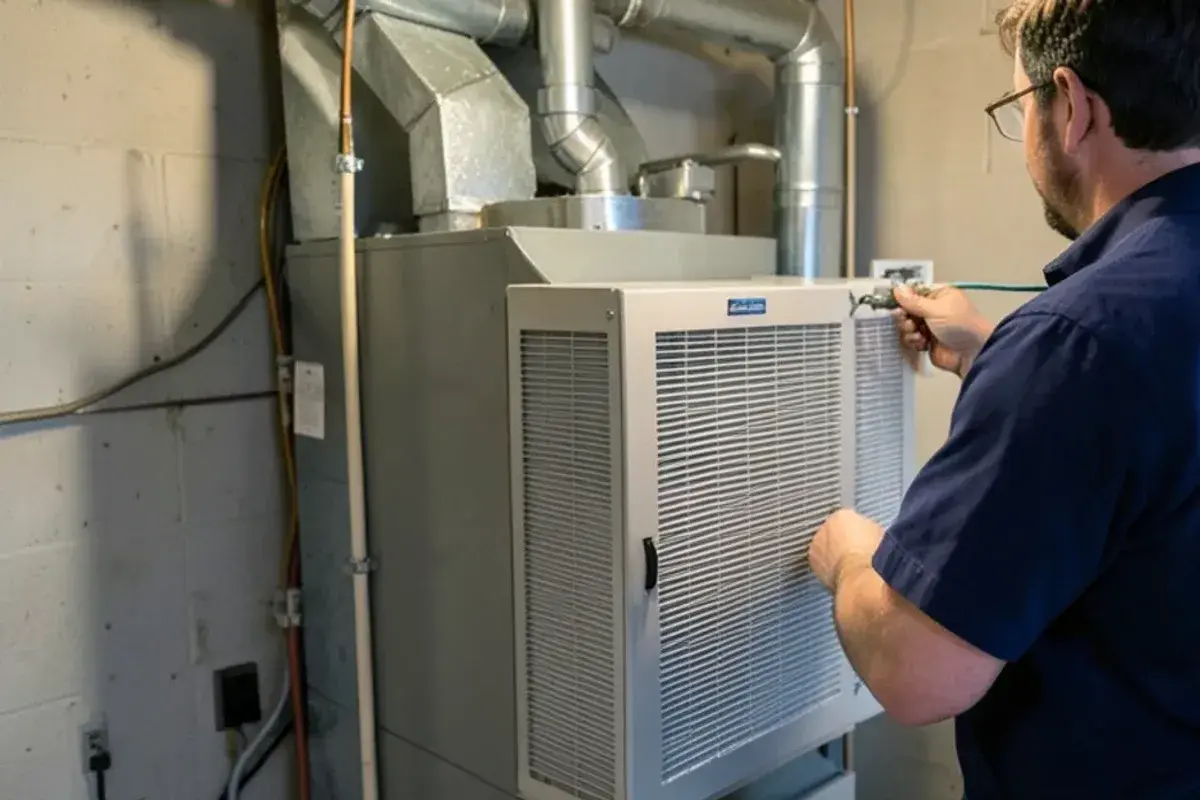
Spring brings tree pollen and cottonwood fluff, and late summer brings ragweed. Pets, cooking and a damp basement add their own load, and some summers bring wildfire smoke that travels in from far away. On those hazy days, keeping windows shut and running filtration is the usual approach.
Furnace-based filtration has a built-in limit. The EPA notes that a furnace or air handler filters air only while the system runs, usually less than a quarter of the time in heating and cooling seasons. Running the blower on a continuous low setting, where the equipment allows it, helps. A portable HEPA unit in the bedroom fills the gap on smoke days.

“John and his crew were very nice, knowledgeable, and professional. They did a great job on my new furnace, AC unit, and air purifier.”
How we choose and size a filtration setup
- Learn what you want to catch. Pollen, pet dander, smoke, or just less dust. Each one favors a different answer.
- Measure what the system can take. Return size, filter cabinet depth and blower type decide how dense a filter we can use.
- Pick the lowest-cost fix that works. Sometimes that is a better filter and a sealed slot. Sometimes it is a media cabinet. We name the cheaper choice if it will do.
- Install and test. We mount the unit, confirm that airflow holds up, and check the system runs as before.
- Teach the upkeep. You learn what to change, how often, and what a clogged element looks like.
Do I need HEPA or UV for allergies?
Not necessarily. We cannot promise relief from allergy symptoms, and no honest contractor can. The EPA treats filtration as a supplement to controlling the source and ventilating, so washing bedding, controlling humidity and keeping pets off beds count too.
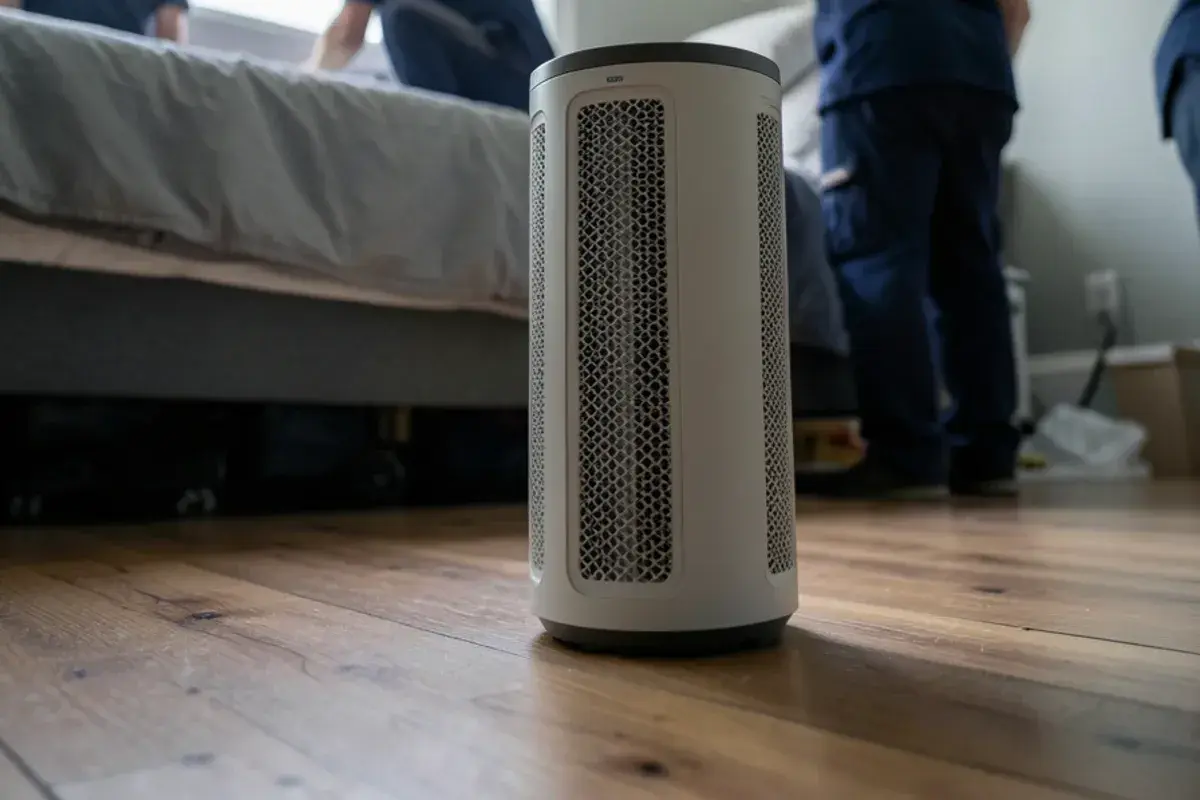
HEPA filters are very effective, but they resist airflow too much for most home furnaces. That is why portable HEPA units are the usual answer for a bedroom, while the central system gets the densest filter it can handle. If a whole-home purifier does fit your system, we explain how it works and what it does not do.
Portable cleaners are sized by CADR, a particle-only rating. The EPA lists these minimums for an 8-foot ceiling, and taller rooms need more:
| Room area | Estimated minimum CADR |
|---|---|
| 100 square feet | 65 cfm |
| 200 square feet | 130 cfm |
| 300 square feet | 195 cfm |
| 400 square feet | 260 cfm |
Boiler and radiator houses have no forced air to carry a central filter, so a portable cleaner is often the only filtration they get. The EPA adds that activated carbon is what removes gases, and the thicker the carbon bed, the better.
What affects the cost of air filtration upgrades?
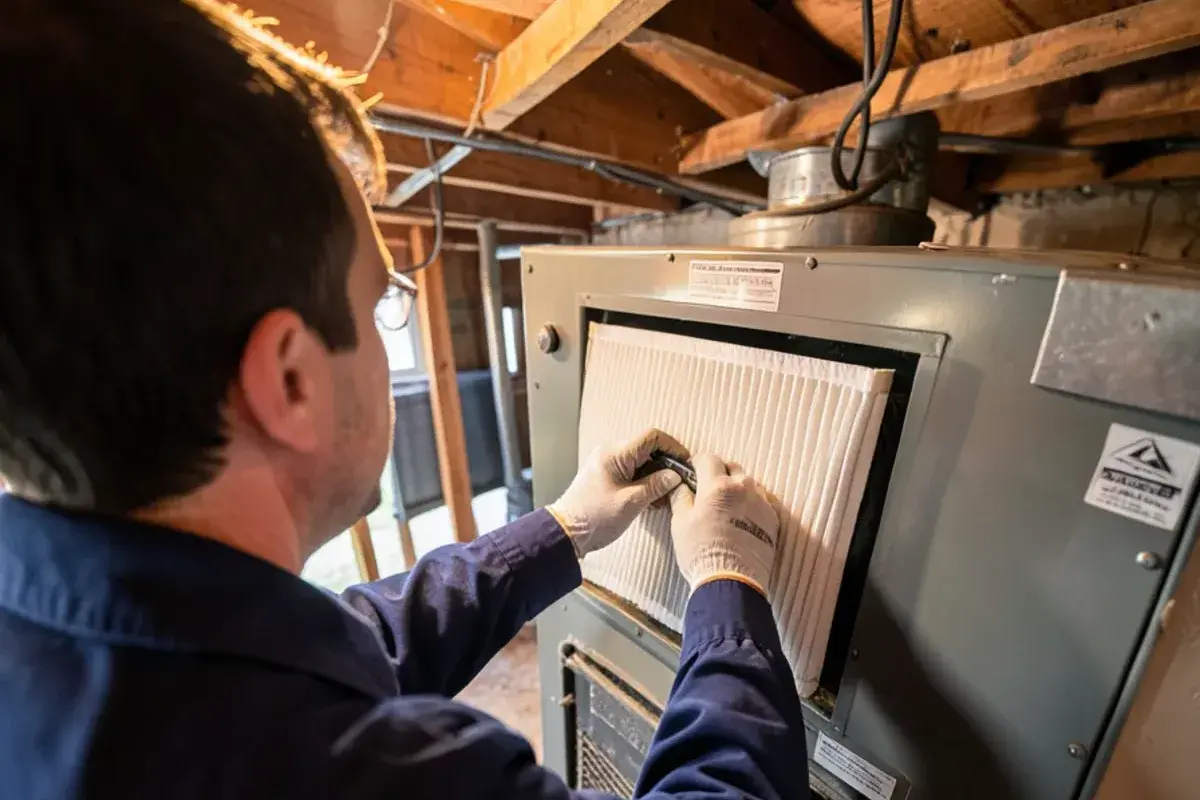
We do not publish prices, so we do not have a figure to quote here. The main factors are the type of equipment, whether a new filter cabinet or duct modification is needed, the electrical connection, and how easy the furnace area is to reach. The quote comes before any work starts.
- Whether a basic filter swap is enough, since that is the cheapest change and the first one to try.
- The depth of the cabinet and whether the return duct must be modified to fit it.
- How often the media has to be replaced. The EPA says standard furnace filters typically need changing every 60 to 90 days.
- Electricity, because the EPA notes that longer blower run times raise power use.
Replacement parts matter as much as the purchase price. A media filter has to be changed on the schedule its maker sets, and a purifier cell or lamp has its own. We tell you the upkeep cost up front. For the basics of filter swaps, see our guide on how often to change your HVAC filter.
Warranty, care and what to expect afterward
- Set a reminder for filter changes, and write the install date on the cabinet.
- If the system sounds different or airflow drops, call us. The filter may be too dense.
- Keep the area around the furnace clear so air can move freely.
- Ask about duct repair if leaks are sending dust into the system.
Why Vantage for air purifiers and filtration
We tell you what not to buy
Reviewers describe honest recommendations, and we apply that to filtration. If a basic filter will do, we say so, and we skip anything that makes ozone.
Customers have used us for purifiers
One reviewer lists an air purifier among the equipment we installed for them, alongside a new furnace and AC. We check airflow after any filter change.
Rated 4.9 on Google
Our Google rating is 4.9 from 57 reviews as of October 2026, and customers say we explain each step before we start. Browse the reviews.
Warranty. Warranty on a filter cabinet or purifier depends on the product and the manufacturer, and filter media and lamps are usually consumable parts. We go over what applies before you approve the work.
Where we work. We install filtration systems from our base in Orchard Park across the Southtowns and greater Buffalo, including Lackawanna, Hamburg and Amherst. See all communities we serve.
What customers said
“They installed all of the new equipment in roughly two full days, and I have a comfortable home in the summer time for the first time ever.”
“John and his team were wonderful. They provided us the best quote we received out of 6 different contractors and still offered an excellent product.”
Air Purifiers and Filtration questions
What MERV rating should my furnace filter be?
The EPA recommends MERV 13 or the highest rating your system can accommodate. Many systems handle MERV 13 if the filter is changed often, but a small return or an old blower may not. A technician can confirm with a quick check of your cabinet and airflow, which is much better than guessing and straining the system.
Can a purifier help with wildfire smoke?
It can reduce smoke particles indoors. The EPA suggests a good filter in your system plus a portable HEPA cleaner sized for the room you use most. We also recommend keeping windows shut on smoke days. We cannot promise a medical outcome, but cleaner indoor air is a reasonable goal.
Are UV lights worth adding to a furnace?
Sometimes, for a specific reason such as limiting growth on a damp coil. The EPA says UV light has not been shown to remove gases effectively in home units. We would not sell one as a cure-all. If you are curious, we explain what it does for your system and what it costs to maintain.
Do air purifiers make ozone?
Some do. The EPA warns that ozone is a lung irritant and cautions against ozone generators sold as air cleaners. Certain UV and ionizing devices can also emit ozone. We avoid recommending those and look at the product’s ozone output before installing anything on your ductwork.
Will a thicker filter damage my furnace?
It can if the return is too small. A very dense filter in a restrictive cabinet raises resistance, which can lower airflow and strain the blower. A deeper media cabinet spreads that resistance over more surface. We check your system first so the upgrade helps rather than hurts.
Where we handle air purifiers and filtration
- Orchard ParkLarger newer homes are likelier to have room at the furnace for a deeper media cabinet.
- HamburgLake Erie storms keep windows shut for long stretches, so indoor filtration carries more of the load.
- West SenecaDamp creek-area basements are hard on filter cabinets, so where the unit sits matters.
- LackawannaOlder lakeside houses often have small returns, which limits how dense a furnace filter can be.
- DepewMid-century houses with add-on duct runs need airflow checks before any denser filter goes in.
- AmherstLarger suburban houses often have more than one blower, so each one is checked before choosing a filter.
- ClarenceWooded custom-home lots bring heavy pollen, and dual systems mean two filter cabinets to size.
- WilliamsvilleHistoric village homes with tight ducts or ductless heads often suit a portable HEPA cleaner better.
- ElmaHomes beside hay fields get field dust and pollen, a case for the densest filter the blower can take.
- East AuroraBoiler houses with radiators have no forced air, so portable HEPA cleaners are usually the answer.
More on air purifiers and filtration
Related services
From the blog
Nearby service areas
Talk to the people who do the work
Talk with Vantage about air purifiers and filtration.
- 4.9★ on Google (57 reviews)
- Locally owned since 2011
- 15 years in Western New York
- No high-pressure sales
Vantage Heating and Cooling · Orchard Park, NY · (321) 666-8870 · Mon–Fri 7:30 AM–5:00 PM · Sat–Sun closed