
Problem Solving
Why Is My AC Blowing Warm Air? 7 Common Causes
By John Gach, owner of Vantage Heating and Cooling · Published · Updated

An AC that blows warm air is usually dealing with one of seven problems: a wrong thermostat setting, a dirty filter, no power to the outdoor unit, a dirty condenser coil, a frozen evaporator coil, a failed capacitor or contactor, or low refrigerant. The first four you can often check yourself in a few minutes.
The last three need a technician. Start with the easy ones, because they are also the most common. Warm air from the vents does not always mean the whole system is dead. The indoor blower can run for days while the cooling side has stopped working, which is why people are often surprised that "it is on" and "it is cooling" are different things.
1. Is the thermostat set wrong?
Check the mode and the fan setting before anything else. If the fan is set to "on" instead of "auto," the blower runs constantly and can push warm air from the ducts between cooling cycles. Make sure the mode is cool and the setpoint is below the room temperature. A thermostat with dead batteries can also stop calling for cooling, so replace them if the display is dim.
2. Is the air filter clogged?
Pull the filter and hold it up to a window. Hold it up to a window. No daylight means it is time for a new one. A clogged filter cuts airflow across the indoor coil, which can freeze it and turn the air warm and weak. Many homes need a new filter every one to three months in cooling season, depending on the filter and on pets and dust.
3. Is the outdoor unit getting power?
Go outside. If the condenser fan is not spinning, check the breaker for the outdoor unit and the disconnect box on the wall nearby. A tripped breaker can happen after a storm or a power blip. Reset it once. If it trips again, stop and call. There is also usually a float switch near the indoor unit that cuts power when the condensate drain backs up. Water in the drain pan can cause this shutdown.
4. Is the outdoor coil dirty?
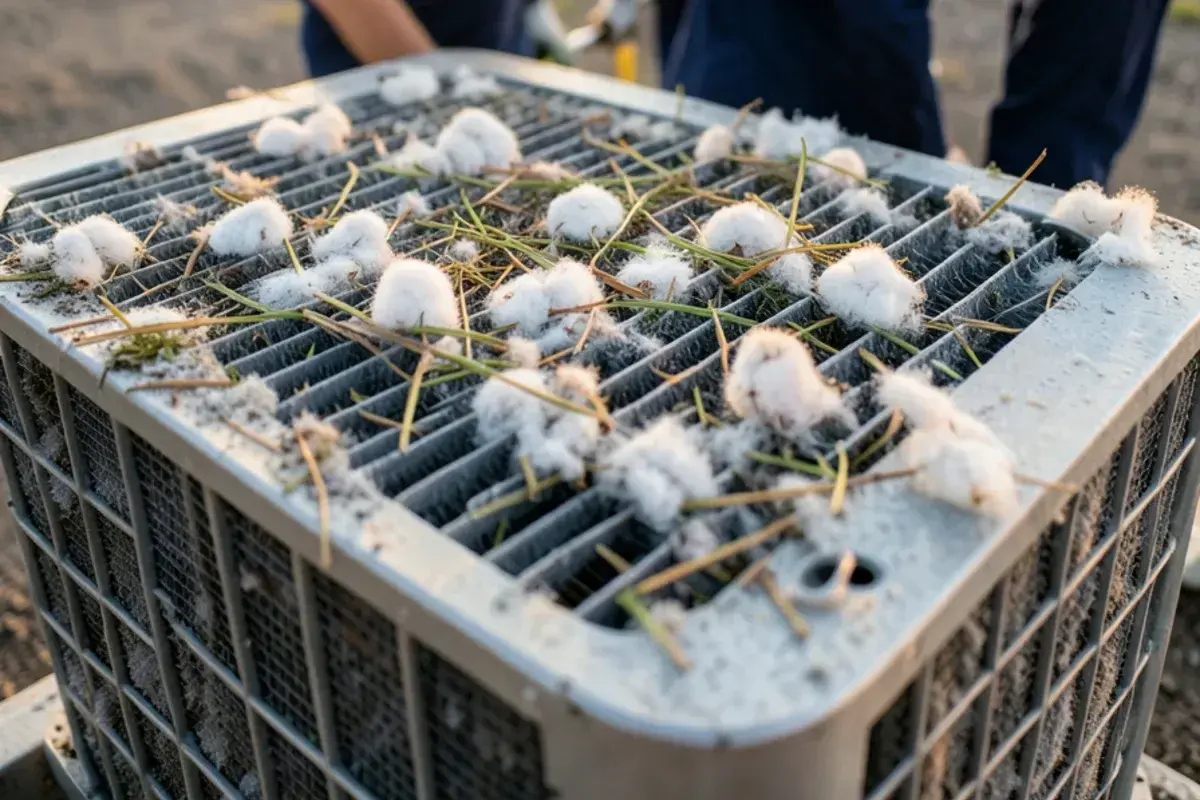
The outdoor coil releases the heat from your house. When cottonwood fluff, grass clippings or dust cover it, heat cannot escape, the system works harder, and the air inside stops getting cold. With the power off, rinse the fins gently from the inside out with a garden hose. Use no pressure washer. Keep plants and fences about two feet away.
5. Is the evaporator coil frozen?
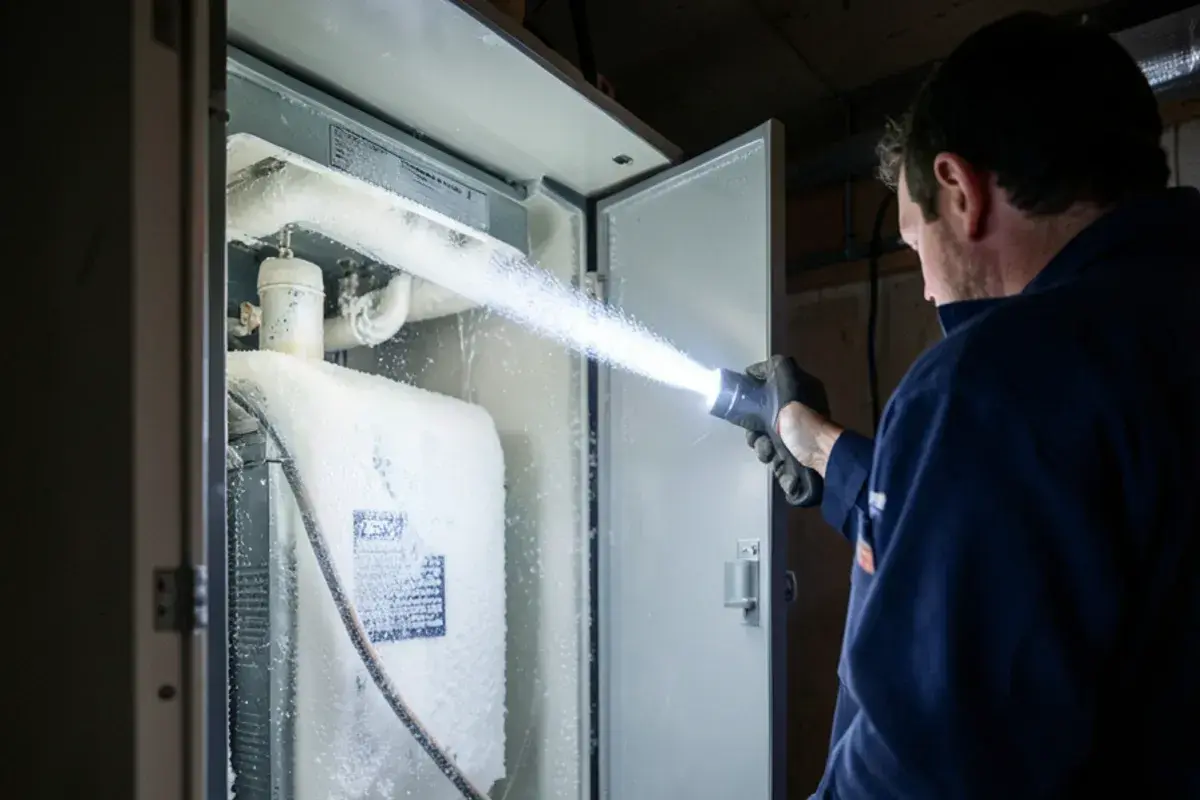
A frozen indoor coil is common and often hidden. Signs include weak airflow, ice on the copper line outside or on the indoor unit, and water pooling when it thaws. Causes include a dirty filter, closed vents, a blocked return, a failing blower or low refrigerant. Switch the thermostat to off and the fan to on to thaw it, which can take a few hours.
Thawing does not fix the cause. If it freezes again, the cause is something other than a filter, and it needs a diagnosis.
6. Has a capacitor or contactor failed?
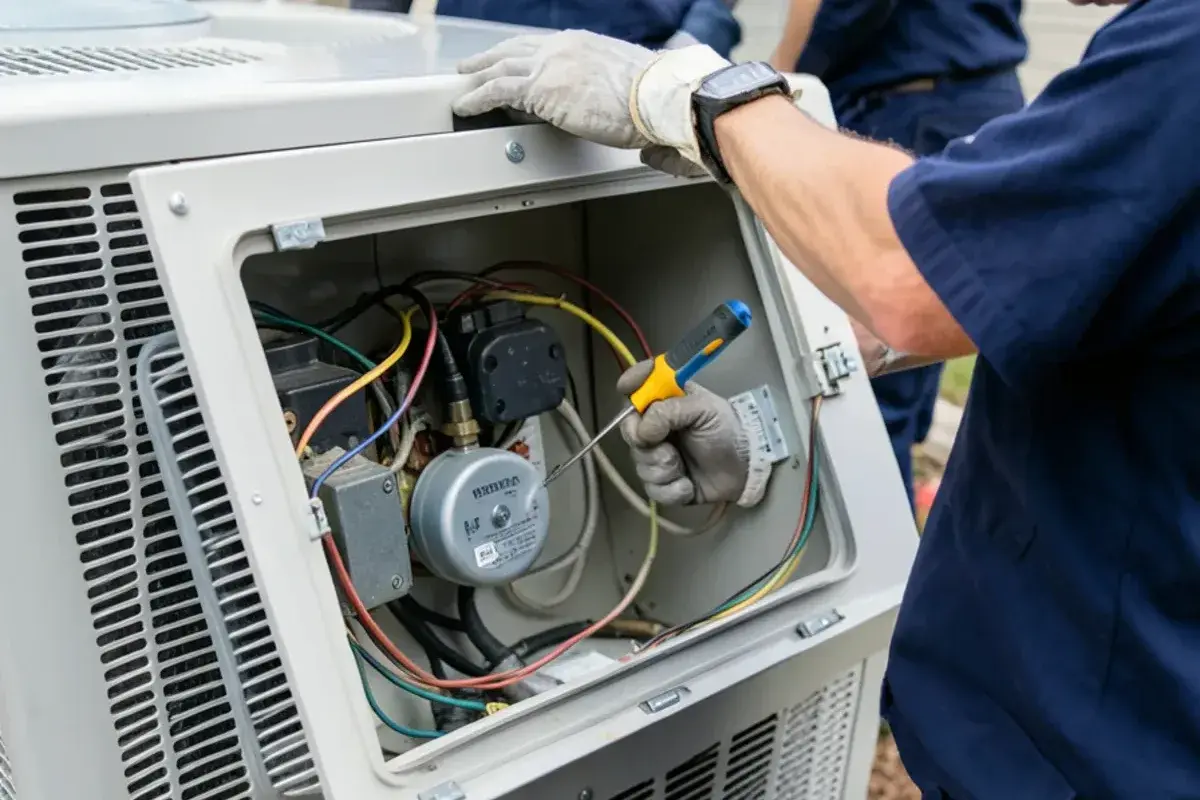
If the indoor fan runs but the outdoor unit is silent or hums without starting, a failed capacitor or contactor is a frequent culprit. The capacitor gives the motor and compressor the jolt they need to start. Fixr's January 2026 national data lists capacitor replacement at about $100 to $400. That is a national third-party range, not our quote, and we publish no price list. A part that is cheap to replace is still dangerous to handle because capacitors store a charge, so leave this one to a technician.
7. Is the refrigerant low?
Refrigerant carries heat out of your house. An AC is a sealed system, so it does not burn refrigerant off like fuel. A low charge means a leak. Symptoms include warm air, longer run times, ice on the lines, and a hissing sound at the indoor coil. The fix is to find the leak, repair it and charge the system to the manufacturer's specification. EPA Section 608 of the Clean Air Act requires certification to handle refrigerant, so this is not a homeowner job, and it is worth asking whoever does the work about it.
Is it really warm air, or just a humid day?
Before you chase a cause, check that the system is actually underperforming. A hot, muggy afternoon makes cool air feel warmer than it is, especially on the second floor. A simple test settles it.
- Run the system for at least 15 minutes with the thermostat well below room temperature.
- Put a probe or digital thermometer in the return grille and read the air going in.
- Put the same thermometer in a supply register close to the indoor unit and read the air coming out.
- Subtract the second number from the first.
A rule of thumb among technicians is a drop of roughly 15 to 20°F across the coil. It is a rough guide, not a standard, and humidity and airflow move it. A very small drop points to refrigerant, a coil or a compressor problem. An unusually large drop with weak airflow often points to a restricted filter or blower. Write both numbers down and give them to us when you call, since they narrow the search. Use a contact thermometer rather than an infrared gun, because an infrared reading of a vent grille can mislead.
Could the ducts or a heat pump explain the warm air?
Two causes sit outside the usual seven, and they fool people.
- Leaky or uninsulated ducts. Cool air can lose its chill in an attic or crawl space before it reaches the room, so one bedroom blows warm while the rest are fine. If the problem is room-specific, look at duct repair, and ask whether the run is sealed and insulated.
- A heat pump running the wrong way. If your outdoor unit is a heat pump, a stuck reversing valve or a thermostat set up for the wrong system type can deliver warm air in cooling mode. The outdoor unit runs, the air is warm, and the filter and coil are fine. That needs a technician, and our heat pump repair page covers it.
| Cause | Check it yourself? | Call a technician when |
|---|---|---|
| Thermostat setting | Yes | Settings are right and nothing changes |
| Dirty filter | Yes | The coil is already iced |
| No power to the outdoor unit | Breaker only, once | The breaker trips again |
| Dirty outdoor coil | Gentle rinse, power off | Fins are bent or the coil is corroded |
| Frozen evaporator coil | Thaw, then retest | It freezes again |
| Capacitor or contactor | No | The outdoor unit hums or is silent |
| Low refrigerant | No | Ice on the lines, hissing, long run times |
How we sort these causes
We rule out the cheap and common before we suggest anything expensive. At a visit we check the thermostat, the filter and the airflow, test the capacitor, contactor and fan motors, read the pressures, and look at both coils. Then we tell you what we found and show you the problem. One reviewer wrote that we diagnosed issues on a separate attic AC system and on a second home, and that the repairs lasted:
“He has diagnosed issues for my baseboard heating, separate attic AC system, and another AC system at my parent's house.”
If the answer is a small part, we fix it. If it is a leaking coil on an old system, we lay out the options and the trade-offs, including AC replacement if that is the sensible move, and you get a clear quote before work starts. Our AC repair page describes the visit.
What can you do to prevent it?
- Change the filter on schedule.
- Keep the outdoor coil clear and rinse it in spring.
- Keep supply and return vents open, even in rooms you do not use.
- Book AC maintenance before the first hot week, when weak capacitors, dirty coils and slow leaks are easy to catch.
What should you do next?
If the quick checks do not bring the cold air back, turn the system off before it ices or damages the compressor, and call. Tell us what you saw at the thermostat, the outdoor unit and the vents. Homes in Kenmore are about 30 minutes from our Orchard Park base. We will tell you honestly when we can get there. Call (321) 666-8870, Monday through Friday, 7:30 AM to 5:00 PM, and leave a message at any other time.
Quick answers
Why is my AC blowing warm air but the fan is running?
The indoor blower can run while the cooling side has failed. Common reasons are a thermostat set to fan only, a failed capacitor or contactor outside, a frozen coil, or low refrigerant. Check the thermostat and the filter first. If the outdoor unit is silent or the lines are iced, shut the system off and call a technician.
Can a dirty air filter make my AC blow warm air?
Yes, indirectly. A clogged filter starves the indoor coil of airflow, the coil can freeze solid, and the air that comes out turns warm and weak. Replacing the filter is the first check because it costs little and takes a minute. If the coil is already iced, let it thaw fully before restarting the system.
Is it okay to add refrigerant myself?
No. Refrigerant is not a consumable, so a low charge means a leak that needs finding and fixing. EPA Section 608 of the Clean Air Act also requires certification to handle refrigerant. A DIY top-off treats the symptom, can overcharge the system, and does not repair the cause. A technician should test, fix and charge it by weight.