
Local Angles
Do Heat Pumps Work Through a Buffalo Winter?
By John Gach, owner of Vantage Heating and Cooling · Published · Updated
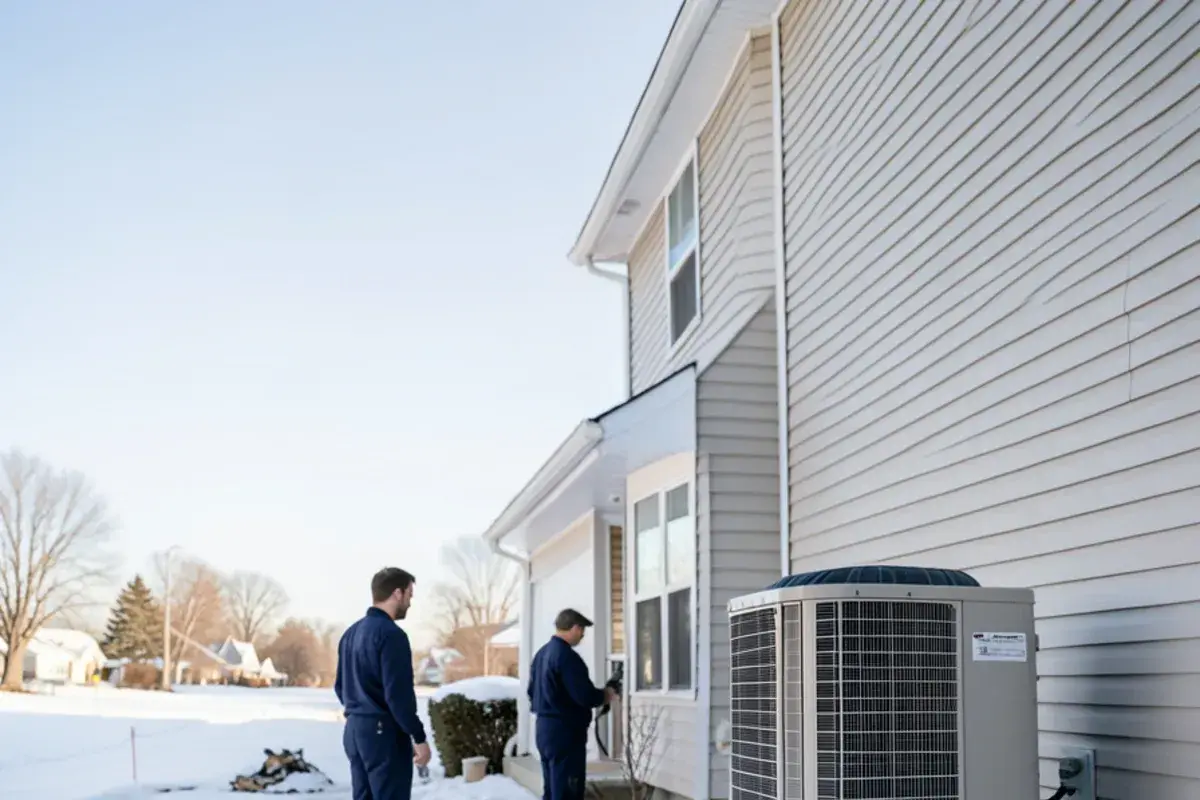
Yes, a heat pump can heat a Buffalo house through winter, as long as it is a cold-climate model, sized to the house and installed well. The old rule that heat pumps quit at freezing no longer holds for current equipment. What matters now is the match between the unit and your home.
Buffalo is a hard test. NOAA normals put the city at about 6,466 heating degree days a year, and roughly 50 nights a year drop to 20°F or below (as reported by MyWild.Report). Here is what that means for a heat pump.
How does a heat pump heat when it is freezing outside?
A heat pump moves heat instead of making it. Even cold outdoor air holds heat, and the compressor pulls it indoors. The colder the air, the less heat there is to move, so output and efficiency both fall as the temperature drops.
Cold-climate models use variable-speed compressors to keep output up in the cold. NEEP, a Northeast efficiency group, publishes a specification for these units. It asks for a variable-capacity compressor and a coefficient of performance above 1.75 at 5°F. NEEP also says the specification is a minimum, and that meeting it does not make a unit right for every house.
NYS Clean Heat reports that research shows cold-climate heat pumps can heat a home at air temperatures as low as minus 15°F. It adds that the system has to be properly sized and located.
What goes wrong with heat pumps in Western New York?
Most failures come from the design, not the machine. The usual causes:
- Undersized equipment. A unit picked by square footage can run flat out all winter and still fall behind.
- No plan for the coldest nights. Without backup, the house drops when the load beats the unit.
- Leaky ducts or a poor air handler match. Heat made at the outdoor unit is lost before it reaches the rooms.
- Snow around the outdoor unit. Lake-effect drifts can bury a unit set too low, which blocks the airflow it needs.
- Poor insulation and air sealing. A leaky 1940s house has a bigger load than the same footprint built tight.
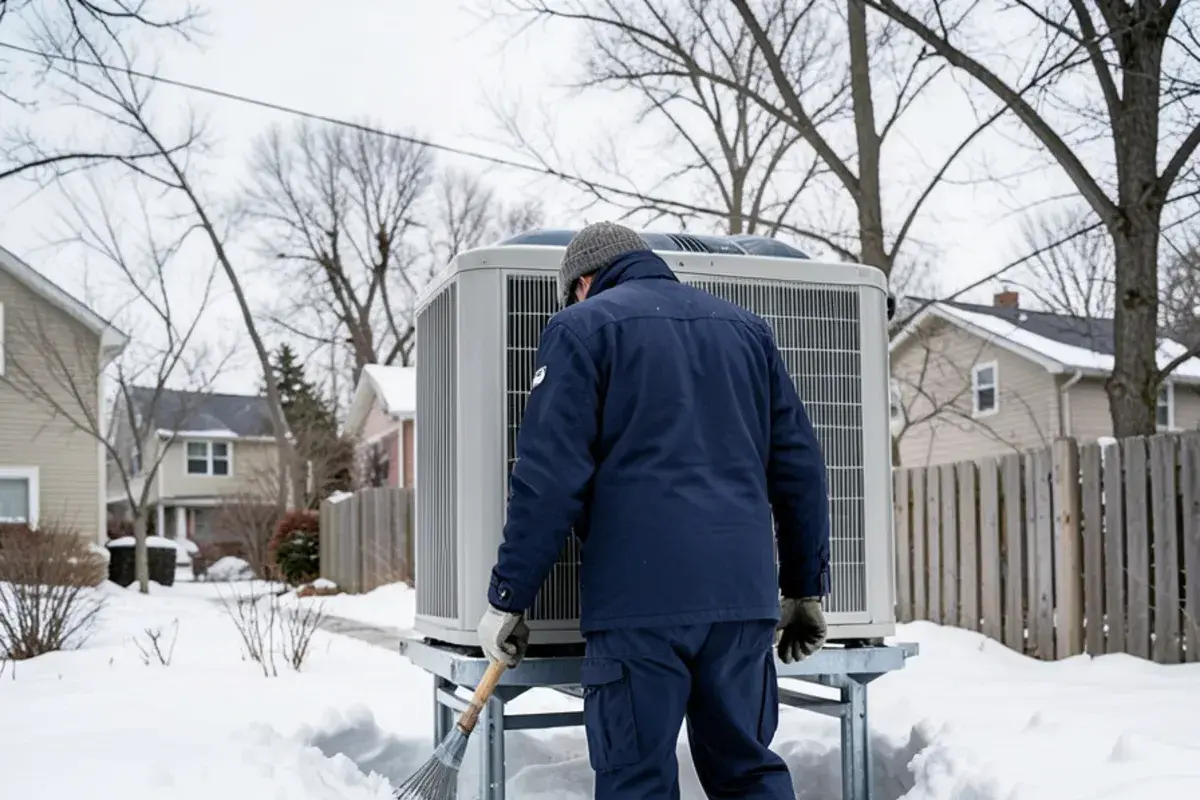
NYS Clean Heat also gives two placement rules worth knowing. It says to mount the outdoor unit at least 18 inches above the ground, on a gabled side of the house, so it sits above snow buildup. It also says to fix air sealing and insulation problems before the system is sized, because a tighter house needs a smaller unit.
What is a balance point, and why does it matter?
The balance point is the outdoor temperature where the heat pump's maximum output equals the house's heat loss. Above it, the pump carries the house alone. Below it, something else has to help. A load calculation finds that number for your house, and a leaky 1940s double will have a much colder one than a tight newer build.
A second number matters too: the temperature where running the pump costs more than running the backup. Electric strip heat converts electricity to heat at a one-to-one ratio, so the pump beats it at almost every temperature. Against gas, the answer depends on both utility rates. We set the switchover on the thermostat, and we write the number down so you know what the system will do on a 5°F night.
What do you need to ask before you buy?
Ask for these and expect real answers.
| Question | Why it matters |
|---|---|
| Was a Manual J load calculation done? | NYS energy code calls for equipment selected from Manual J loads or another approved method |
| What is the output at 5°F, not 47°F? | Rated capacity at mild temperatures hides the cold-weather number |
| What is the backup heat plan? | Strip heat, a furnace or a boiler all work, and each costs differently to run |
| Where does the outdoor unit sit? | Raised and clear of drifts, roof runoff and the snow plow pile |
| What do the ducts look like? | Leaky or undersized ducts waste the pump's output |
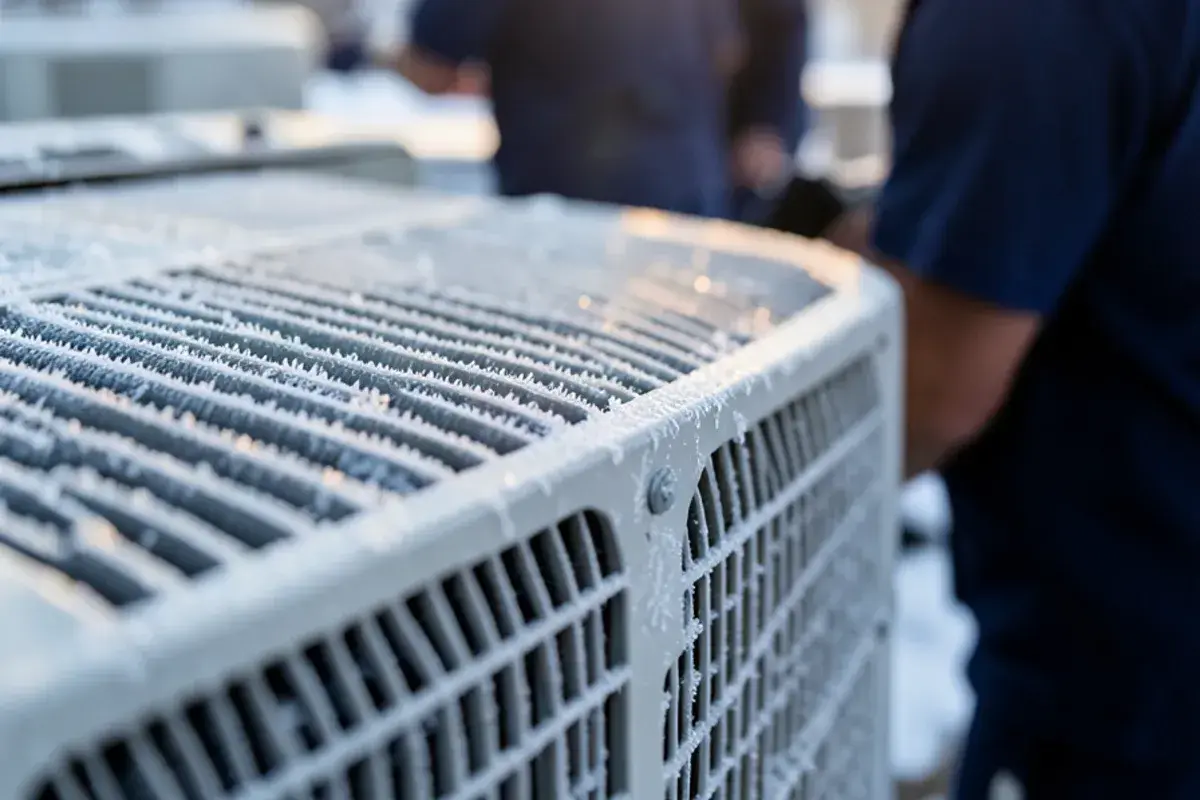
Two more points. First, NYS Clean Heat says air-source units must be NEEP-qualified to earn its rebates, so check the model against NEEP's cold-climate product list. Second, a brief cloud of steam as it clears frost is normal. Steam that never stops, or ice that stays thick on the coil, is not.
How we look at a heat pump job
We start with the house, not the equipment. How big is the heating load on a 5°F night, how does the heat travel through the home, and what already works? Sometimes a heat pump covers the whole load. Sometimes it works best beside an existing furnace or boiler, and sometimes the honest answer is to stay with what you have.
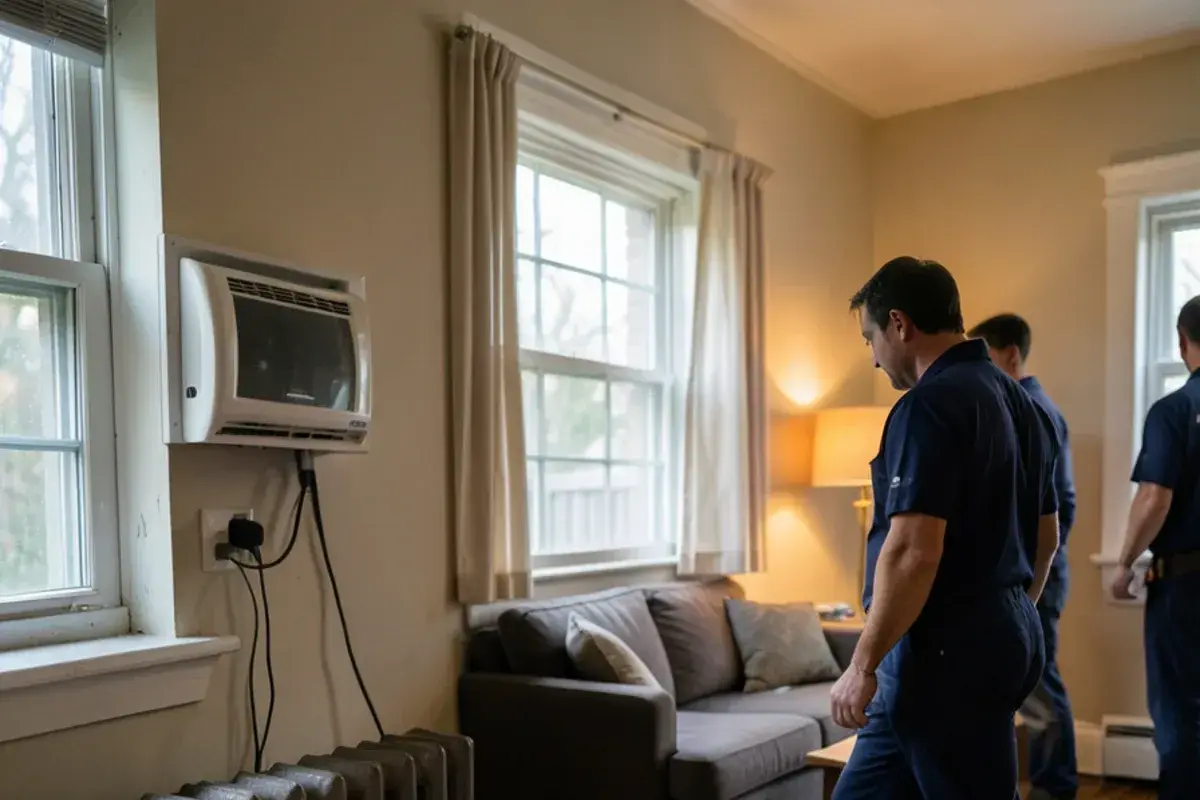
A radiator or boiler home often fits a different answer. Ducts do not exist, and cutting them through plaster is a poor trade. A ductless mini split heats and cools room by room, and it can sit beside the boiler so the old system takes over on the worst nights. If you only need a new furnace, furnace installation is the simpler route, and we say so.
If you are comparing options, we explain each step and give a clear quote before work starts. Our heat pump installation page covers the process, and we compare choices in heat pump vs furnace. If a unit you already have is acting up, see heat pump repair or why a heat pump freezes up.
Does the same unit cool in summer?
Yes. A heat pump runs in reverse as an air conditioner, so one system handles both seasons. Buffalo has about 2.1 days a year above 90°F, according to the Great Lakes Integrated Sciences and Assessments program at the University of Michigan. Cooling load is light here, which means the winter load should drive the sizing. Pick the unit for January, and July takes care of itself.
What does backup heat do on the coldest nights?
Backup heat covers the gap when the heat pump alone cannot hold the set temperature. It comes in three common forms: electric strip heat, an existing gas furnace, or a boiler. Electric strip heat is simple to install but costly to run. A gas furnace as backup costs less to run on the coldest nights, though you keep two systems to maintain.
Ask how the controls decide when to switch over. A well-set system uses the heat pump as the main source and the backup only when it needs help. If strip heat runs often, something is off with the sizing, the settings or the unit.
What about rebates?
Incentives change, so check the current program page before you decide. The federal Section 25C credit expired December 31, 2025, so heat pumps installed in 2026 do not qualify. NYS Clean Heat gives heat pump rebates through your electric utility, and only a participating contractor can file the paperwork. Confirm that your contractor is on the program before you sign. Our guide to HVAC rebates in New York lists what to check.
Is a heat pump right for your house?
It depends on the size of the load, the condition of the ducts and what you want from backup heat. In mid-century neighborhoods like Depew, a ducted system can fit when the existing ducts are in good shape. In Hamburg, in the heart of the snow belt, the outdoor unit location matters as much as the model.
Call us at (321) 666-8870, Monday through Friday, 7:30 AM to 5:00 PM. We will tell you honestly what we think.
Quick answers
Is steam from my heat pump in winter a problem?
Usually not. A heat pump collects frost on its outdoor coil in cold, damp weather and periodically reverses to melt it, which can throw off a short cloud of steam while the fan pauses. Call if the steam never stops, if ice stays thick on the coil, or if the house cools while the unit runs.
Will a heat pump keep my house warm at 0 degrees?
A properly sized cold-climate heat pump can, though it works harder and uses more electricity as the air gets colder. NYS Clean Heat says research shows these units can heat a home at air temperatures as low as minus 15 degrees. Sizing is the deciding factor, so ask for a load calculation, not a rule-of-thumb estimate.
Do I still need my furnace if I get a heat pump?
Not always. Some homes keep the furnace as backup for the coldest nights, and some rely on electric strip heat inside the air handler. A load calculation tells you how much heat the pump covers at your design temperature. If it covers the whole load, the furnace can go. If it does not, plan the backup first.
Sources
- NYS Clean Heat, Heat Pumps for Cold Climates: Do They Work?
- NEEP, Cold Climate Air-Source Heat Pump Specification (version 3.1 update)
- Great Lakes Integrated Sciences and Assessments, University of Michigan, Buffalo climate summary (about 2.1 days a year above 90F)
- NOAA 1991-2020 normals for Buffalo (6,466 heating degree days)