
Cost and Insurance
Does Home Insurance Cover a Broken HVAC System?
By John Gach, owner of Vantage Heating and Cooling · Published · Updated

Does home insurance cover HVAC? Usually only when something sudden and covered damages the system, and not when it fails from age or wear. Fire, lightning or a falling tree is a different story from a unit that simply quits. Your own policy decides, so ask your agent.
GEICO's guidance says normal wear and tear, aging parts and general breakdowns from years of use are not covered under a homeowners policy.
We are an HVAC company, not an insurer, so treat this as general information. What follows explains how the pieces usually fit and how to make a claim easier if you have one.
When does homeowners insurance pay for HVAC damage?
Policies generally cover the home and attached equipment for named perils. Sources such as GEICO and Policygenius describe the furnace and central air as part of the dwelling, covered when a listed event damages them.
| Situation | Usually covered? | Why |
|---|---|---|
| Fire damages the furnace | Often yes | Fire is a standard covered peril |
| Lightning or a power surge fries an AC board | Often yes, check your policy | Sudden damage from a covered cause |
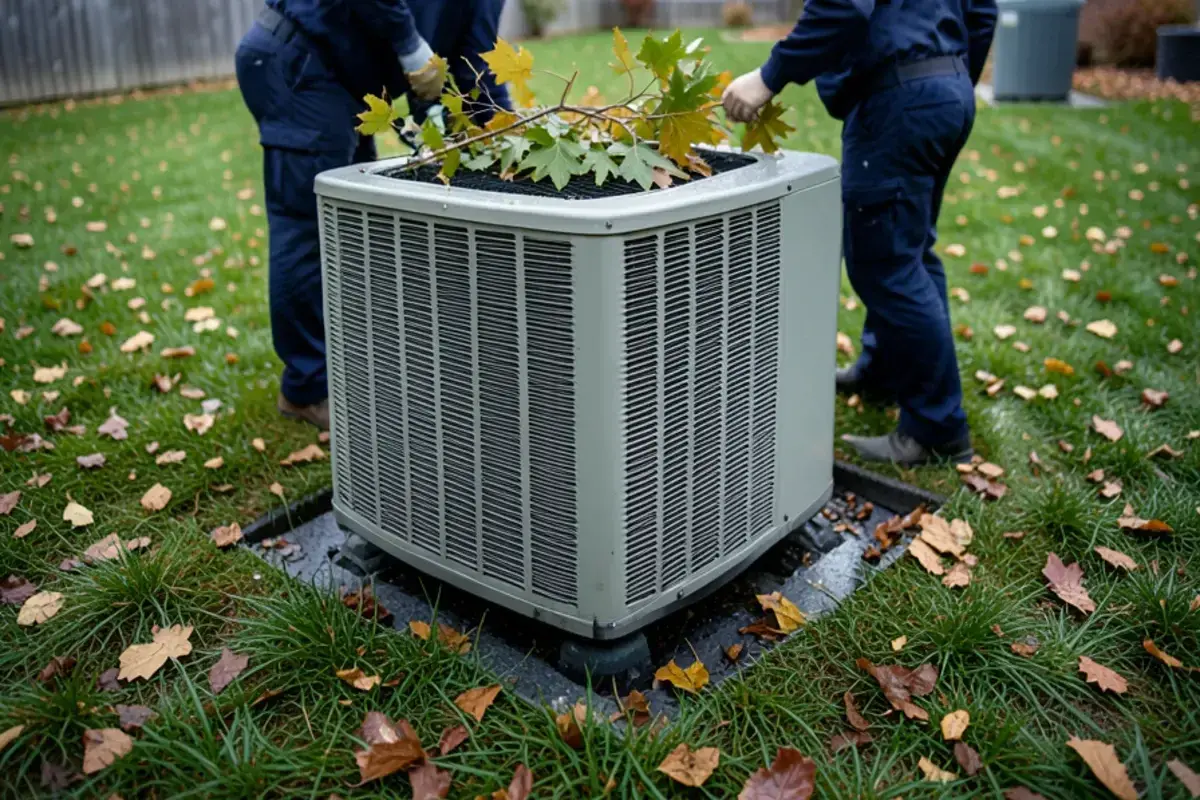
| A tree limb crushes the outdoor unit | Often yes | Wind and falling objects are common perils |
| A pipe bursts and floods the basement furnace | Sometimes | Depends on the cause and your water damage terms |
| The furnace dies at 22 years old | Usually no | Age and wear are excluded |
| The compressor fails for no clear outside reason | Usually no | Mechanical breakdown is excluded |
| Rust, corrosion or neglect | No | Maintenance exclusions |
The pattern is simple. Insurance responds to events, not to age. Terms vary by insurer and state, and a deductible may mean a small claim is not worth filing.
What about a system that just wore out?
That is the common case, and it is the one insurance does not cover. Lemonade lists mechanical breakdown as a standard exclusion. The two usual ways to cover that gap are:
- Equipment breakdown coverage. Policygenius describes it as an optional add-on that covers causes of failure that a standard policy excludes, including mechanical and electrical breakdown. Ask your agent for the deductible, the limits and any age cap on equipment.
- A home warranty. Lemonade says a home warranty is a separate product that covers mechanical breakdown and wear and tear. Those contracts have their own caps, exclusions and service rules, so read them before you buy.
Neither is a reason to skip maintenance. Insurers and warranty companies can deny claims tied to neglect, and an annual record of furnace maintenance or AC maintenance is the best evidence that you looked after the equipment.
What if the cause was a power surge?
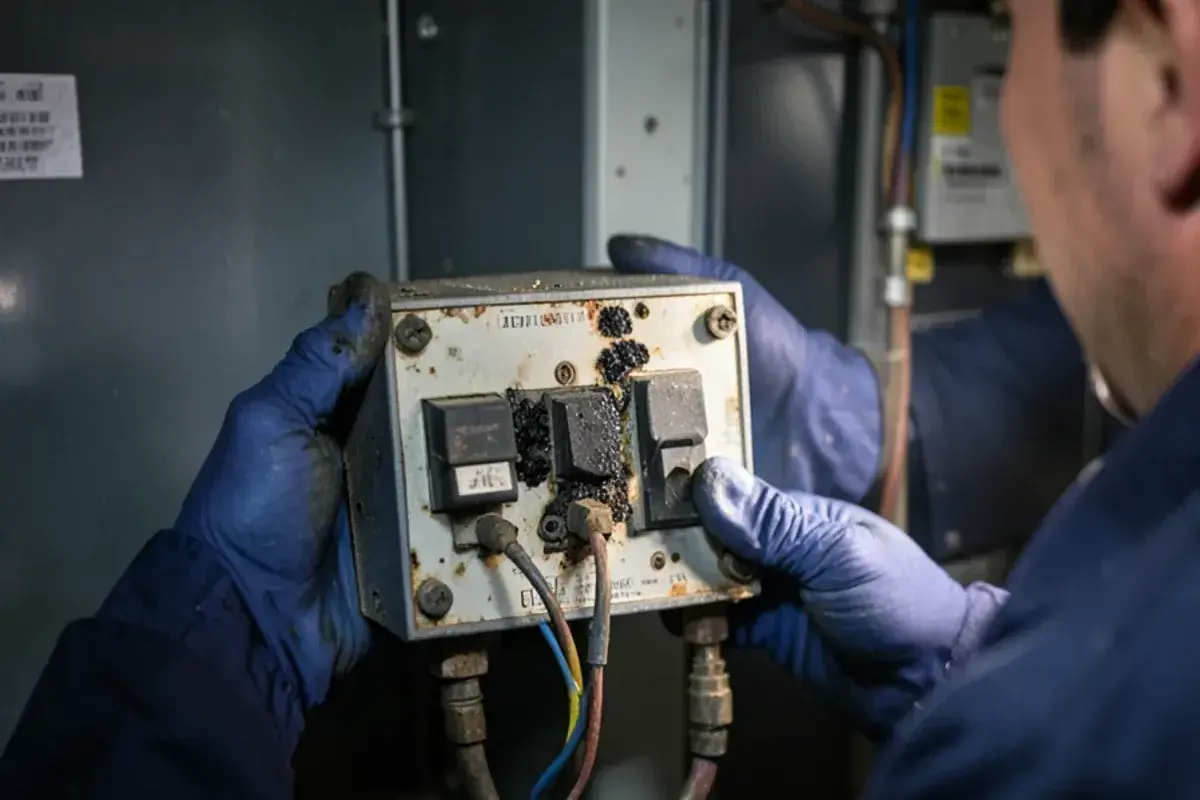
Surge claims are where HVAC and insurance meet most often, because a control board is easy to damage and costly to replace. Policygenius says coverage "all depends on the type of coverage you have and what caused the surge." Its guide says homeowners policies generally cover lightning and the surge it causes. A surge from the utility side may be covered, but many insurers exclude damage to the components inside an appliance. An overloaded circuit or exposed wiring will likely not be covered.
Two practical points follow. First, find out whether your policy has a surge exclusion or an equipment breakdown endorsement before the storm, not after. Second, the cause is part of the claim. If a board is burned and the neighborhood lost power in a storm, tell your insurer and tell us. We can describe the damage we see on the board, but we cannot prove what caused it. Surge damage can look the same whether it came from lightning, a grid event or a house wiring fault, so treat that call as your insurer's to make.
Another term to ask about is replacement cost versus actual cash value. Policygenius notes that replacement cost policies pay for new items and actual cash value policies pay only the depreciated value. On a ten-year-old furnace that gap can be large.
What should you do if you think a covered event damaged your system?
- Make the home safe. Switch the equipment off at the breaker. If you smell gas, leave and call National Fuel at 1-800-444-3130 or 911 from outside. If a carbon monoxide alarm sounds, go outside and call 911.
- Stop further damage. Cover broken parts, shut off water, and keep people away from damaged wiring.
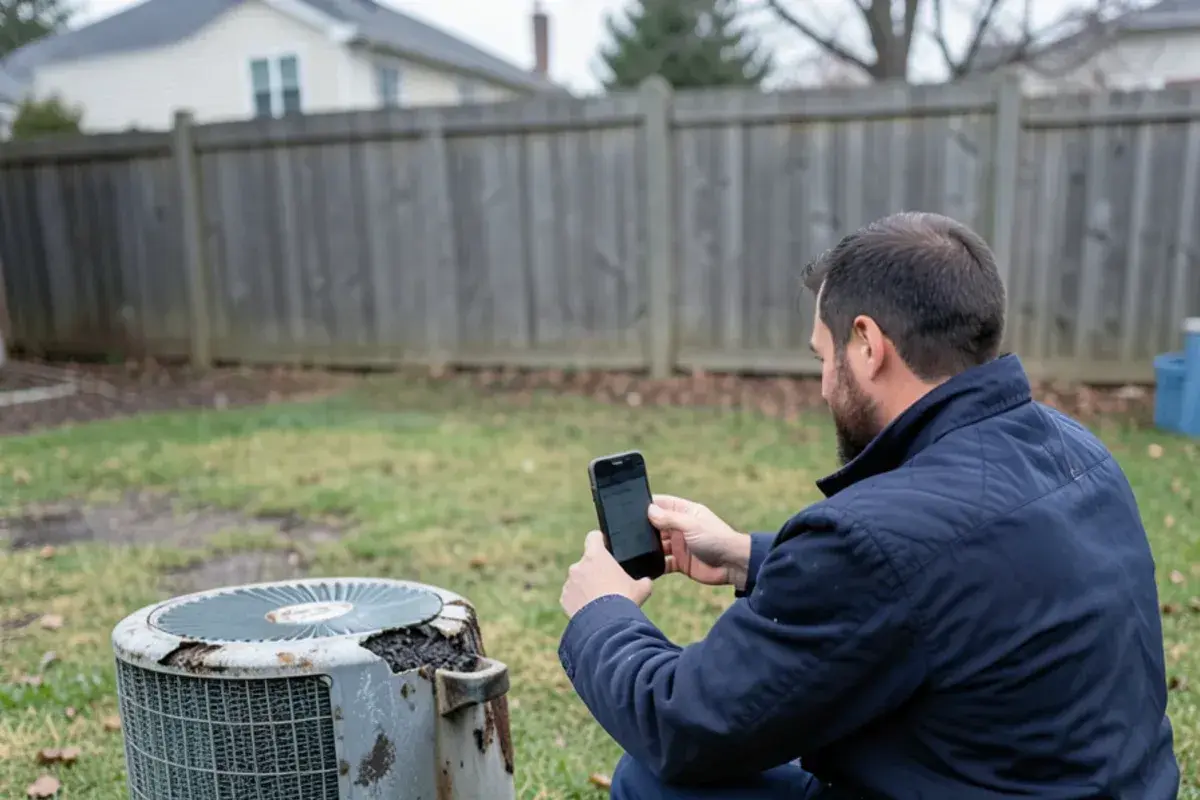
- Photograph everything before you touch it. Take wide shots and close-ups of the unit, the model plate, the surrounding damage and the cause, such as the tree limb.
- Keep failed parts. The adjuster may want to see them.
- Call your insurer early. Ask about the deductible, any required inspection, and whether you can start temporary repairs.
- Get a clear description from your HVAC company. It should say what failed, what likely caused it, and what the repair or replacement involves.
How we look at a claim-related repair
We diagnose and describe. We do not decide your coverage and we do not argue with your insurer. When you call us about a unit that may have been damaged by an event, we look for the cause, whether that is a surge, water, impact or plain wear, and we tell you what we see. That description is useful to your adjuster only if it is accurate, so we describe it that way, with no spin in either direction.
We also give you a clear quote before work starts and explain the options, so you can compare them with your insurer's estimate. If you are weighing a repair or a new system, our AC repair and furnace replacement pages describe how we work. For the broader picture of cooling services, see our air conditioning overview.
How long does an insurer have to respond in New York?
New York sets claim-handling timelines in Regulation 64, which is 11 NYCRR Part 216. Section 216.4 says an insurer must acknowledge a notice of claim within 15 business days. Section 216.6 says the insurer must tell you in writing whether the claim is accepted or rejected within 15 business days after it receives a properly executed proof of loss and everything it requested. If it needs more time, it must tell you within the same period and give its reasons, and it must send a letter with its reasons every 90 days while the claim stays unsettled.
Those are the state's rules, summarized, and they carry exceptions, so read the current text or ask the Department of Financial Services about your situation. They matter to you for one reason. A furnace that died in January cannot wait weeks for an answer, so heat the house first. Ask your insurer in the first call whether you may make temporary or emergency repairs, and what records they want. Then keep your receipts.
What the adjuster tends to ask for is predictable, so gather it once.
| Insurer may ask for | Where it comes from |
|---|---|
| Date and cause of the event | You, with any utility or weather record |
| Photos and video of the damage | You, taken before any repair |
| Model and serial numbers | The data plate on the unit |
| Age and maintenance history | Your tune-up records |
| Description of the failure and the repair | Your HVAC company, in a clear quote |
| Receipts for emergency measures | You |
How do you avoid a denied claim?
Most denials come down to cause and records. A few habits help:
- Keep receipts and reports from every tune-up. A dated record shows the equipment was cared for.
- Replace filters on schedule and keep the outdoor unit clear of plants and debris.
- Install a surge protector on the AC and furnace circuits if an electrician recommends it.
- Ask your agent each year whether your policy includes equipment breakdown, and what the age limits are.
- Do not remove or discard damaged equipment before the insurer has had its chance to inspect it.
What if insurance says no?
Then it is a repair-or-replace decision on its own merits. We cover that in plain numbers in our guides on furnace replacement cost and AC repair cost. In short, a repair that is small compared with a new system usually makes sense, and a repair that is half or more of replacement deserves a hard look, particularly on an older unit.
Who should you call first?
Call your insurer first if you think a covered event caused the damage, then call us with the details. We serve homes in Amherst, about 30 minutes from our Orchard Park base, and elsewhere in Erie County. Reach us at (321) 666-8870 during office hours, Monday through Friday, 7:30 AM to 5:00 PM, or leave a message at any other time.
Quick answers
Will my insurance replace a furnace that is simply old?
Almost never. Insurers such as GEICO say normal wear and tear, aging parts and general breakdown from years of use are not covered under homeowners insurance. Coverage generally needs a sudden covered cause such as fire or lightning. Read your policy, and call your agent before you assume either way, since terms differ by insurer and state.
What is equipment breakdown coverage?
It is an optional add-on, sometimes called an endorsement, that can cover mechanical or electrical failure that a standard policy excludes. Policygenius describes it this way. It adds to your premium and has its own deductible and limits. Ask your agent whether your policy has it, what it covers, and whether age limits apply to older equipment.
Should I fix the HVAC before the adjuster comes?
Only protect the home from further damage, such as shutting off water or power. Take photos and video first and keep the damaged parts if you can. Your insurer may want to inspect before repairs. Call your insurer before you approve a replacement, and ask us for a clear description of what failed and why.
Sources
- GEICO, Does Homeowners Insurance Cover a Furnace?
- Policygenius, Does home insurance cover furnace replacement?
- Policygenius, Does home insurance cover power surges?
- New York Codes, Rules and Regulations, 11 NYCRR 216.4 and 216.6 (Regulation 64, claim handling timelines)
- Lemonade, Does Homeowners Insurance Cover Furnaces?