
Cost and Insurance
How Much Does AC Repair Cost in Buffalo?
By John Gach, owner of Vantage Heating and Cooling · Published · Updated
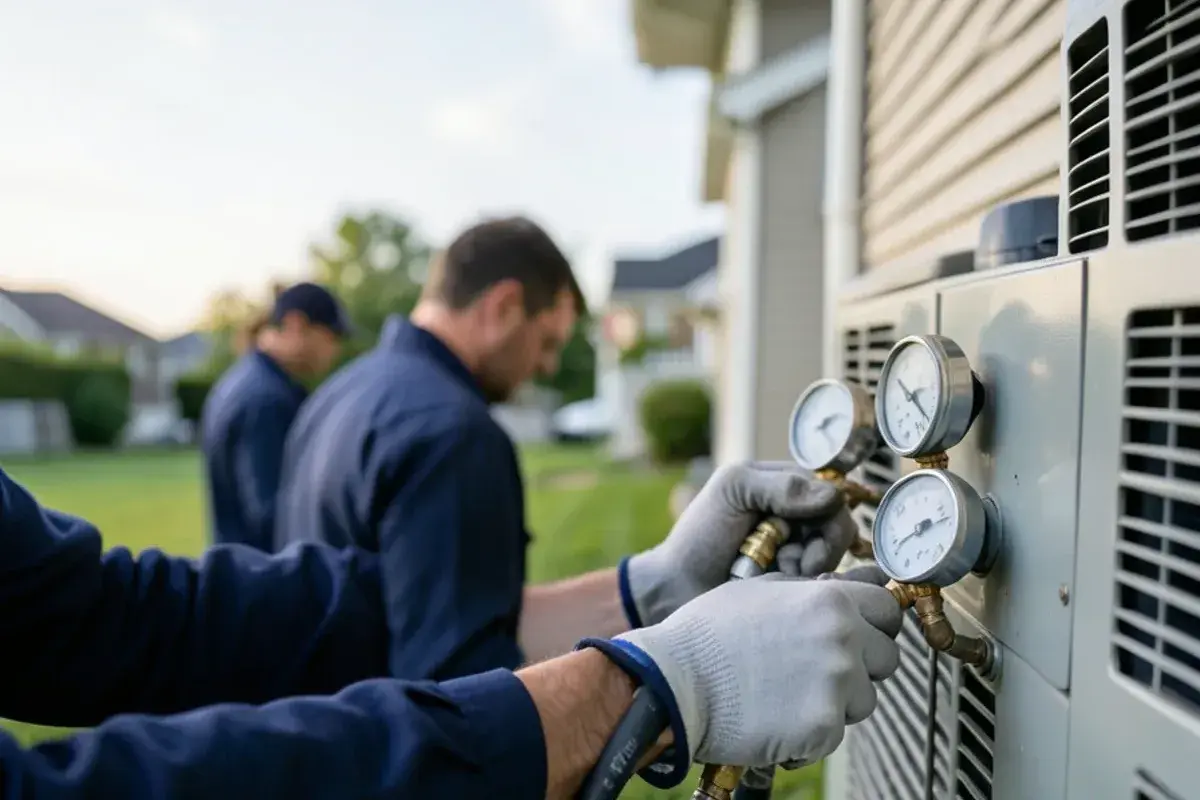
AC repair cost in Buffalo depends on the part that failed, and national guides put typical bills between about $250 and $700, with a few repairs running well above that. These are outside national estimates, not our quote, and we publish no price list.
Fixr's national data, updated in January 2026, lists an average of $375 and a range of $250 to $700. Modernize's 2026 guide shows a higher average of $550 to $1,100. Our own quote comes after we see the system, because the right number depends on your system.
The spread between sources is a clue in itself. "AC repair" covers everything from a small electrical part to a compressor, and nobody can price your unit before someone has looked at it.
What do common AC repairs cost?
Here are national ranges from Fixr's January 2026 data. They are national figures, not Buffalo-specific, and not ours.
| Repair | National range (Fixr, 2026) | Why it varies |
|---|---|---|
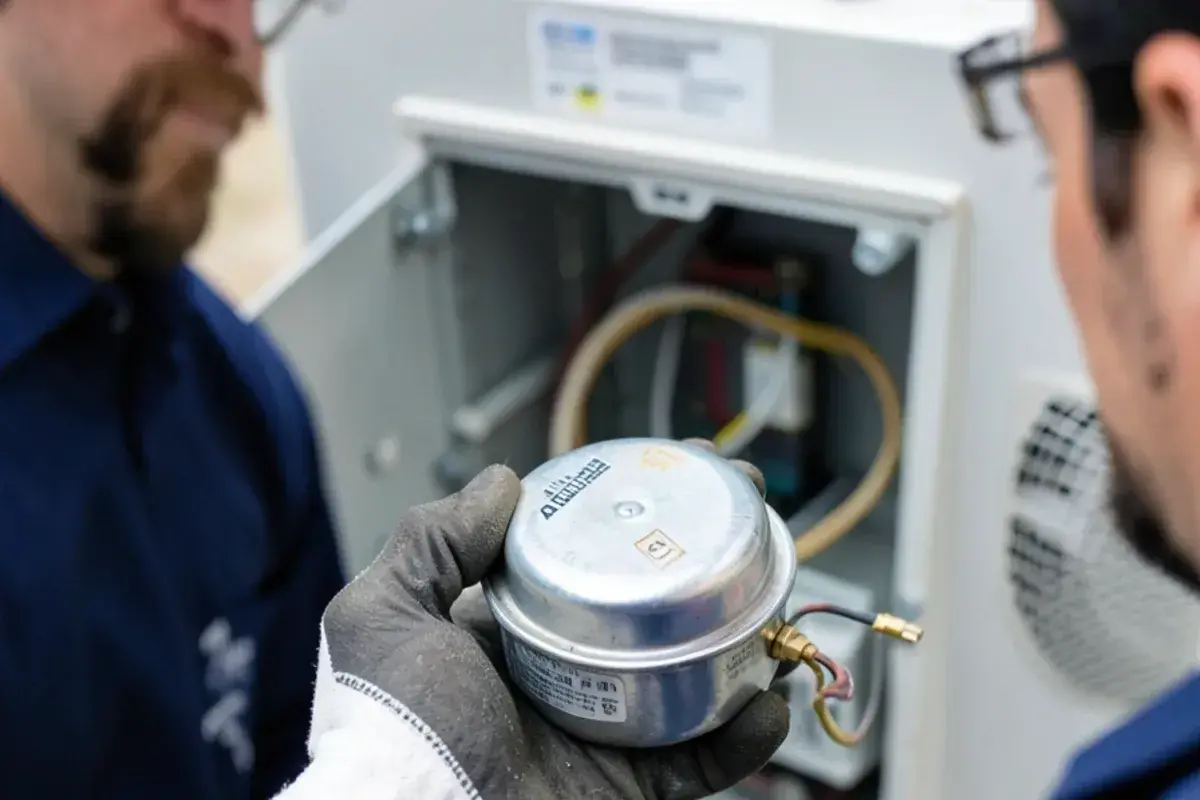
| Capacitor replacement | $100 to $400 | Single or dual run, access to the unit |
| Refrigerant leak repair | $200 to $1,500, average near $800 | Where the leak is, refrigerant type, amount needed |
| Compressor replacement | $600 to $3,000 | Unit size, warranty status, cost of parts |
| Thermostat replacement | $150 to $500 | Basic or wifi model, wiring, whether a C wire must be run |
| Evaporator coil replacement | $400 to $2,700 | Coil size, matching the outdoor unit, refrigerant work |
| Typical repair overall | $250 to $700, average $375 | Mix of small fixes |
Fixr also notes a minimum service call of about $75 on most jobs, and Modernize puts diagnostic fees at $75 to $150. Treat these as examples. A real quote from us comes after we diagnose your unit.
What does an AC repair visit actually include?
The bill makes more sense when you know what the time goes toward. A proper diagnosis is a short sequence, and each step either rules a cause out or confirms it.
- Ask what you saw and heard. What the thermostat showed, whether the outdoor fan ran, and when it started.
- Check power and controls. Thermostat call for cooling, low-voltage power, breaker, disconnect and the safety switches that stop a system when a drain backs up.
- Test the electrical parts. The capacitor is measured against its rating, and the contactor is checked for pitting and a good pull-in. Weak parts are cheap to replace and hard on the compressor if left.
- Check airflow. Filter, blower, coil face and registers. Poor airflow causes freezing and mimics a refrigerant problem.
- Read the refrigerant side only when needed. Pressures and temperatures at the coil tell us whether the charge is right. We do not add refrigerant on a guess.
- Explain the findings. We show you the part or reading, give the options and a clear quote, and wait for your decision.
Most of that work is time and testing, not parts. That is why a diagnostic fee exists at many companies, and why a company that quotes a number before looking has either guessed or built padding into it.
What pushes an AC repair bill up or down?
Five things move the price more than anything else.
- The part. Capacitors, contactors and fan motors are routine. A compressor or an evaporator coil is a major repair.
- Refrigerant type. Older units use R-22, which has been phased out of production, and it is expensive. Newer units use R-410A, and the newest use lower-GWP refrigerants. EPA Section 608 requires certification to handle any of them, so ask who is doing the work.
- Access. A condenser on a flat pad is simple. An attic air handler, such as the separate attic AC systems some of our customers have, takes more time.
- Age. Older units can mean hard-to-find parts and a system that will need more repairs soon.
- Timing. Heat-wave weeks are busy for every contractor. Ask what applies on the phone, and ask about after-hours pricing, since we publish none.
Why does a refrigerant leak cost so much to fix?
AC systems are sealed. They do not use up refrigerant, so a low charge means a leak, and topping it off without finding the leak only buys time. A proper repair finds the leak, fixes it, pressure tests the system and charges it by weight. That is more labor than a plug-and-play part swap, and the wide $200 to $1,500 range in Fixr's data reflects it.
A coil leak can cost more than the repair is worth on an older unit, which is when we talk about replacement. If you are weighing it, read our page on AC replacement.

How we look at repair cost
We start by telling you what we found, in plain terms, and showing you the part when we can. Then we give you the options with trade-offs: repair now, repair and plan to replace, or replace. You get a clear quote before work starts. Customers tell us we explain each step, and one reviewer said the repairs lasted without follow-up calls. That is the standard we aim for.
Some of our reviewers say we have fixed things that others wanted to replace. We do not promise that outcome, because sometimes replacement really is the better choice. If the repair makes sense we will say so, and if it does not we will say that too. See our AC repair page for what a visit covers.
When does repairing stop making sense?
A rough rule says to think hard about replacing when a repair costs half or more of a new system, when the unit is past 12 to 15 years old, or when it uses refrigerant that is getting scarce. A second repair in the same summer is another signal.
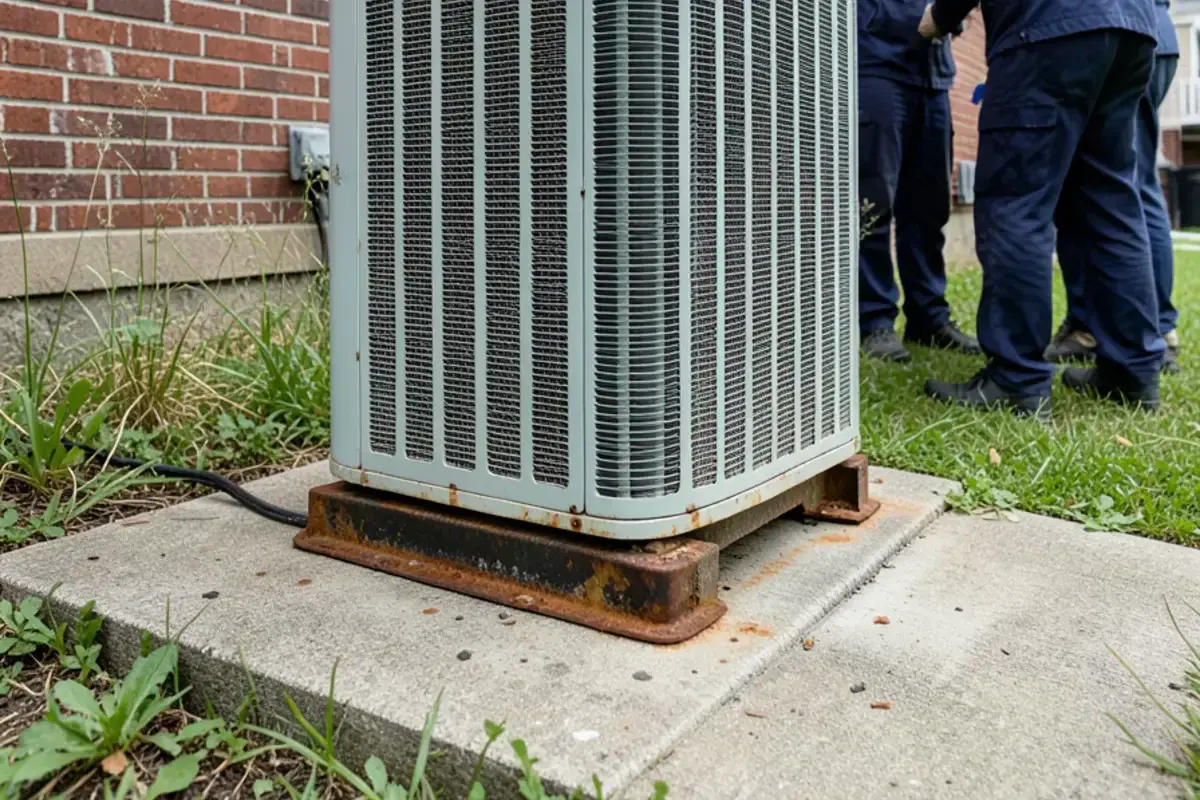
Cooling season in Western New York is short, so a system that runs only a few weeks each summer can last a long time with care. Age alone is not a reason to replace, and condition matters more. Rusted coils, a noisy compressor and repeated capacitor failures all count.
What should you ask before you approve a repair?
Whoever you hire, a few questions protect you from a surprise. Write the answers down, since you may compare them with a second opinion.
- What failed, and what test showed it? Ask to see the reading or the part.
- Is this the only problem, or the first one found? A failed capacitor can have a cause, such as a weak fan motor.
- What does the part cost, what does the labor cost, and is a diagnostic fee credited if you go ahead?
- What does the warranty cover on the part and on the labor? Coverage depends on the part and the manufacturer, and we go over it before you approve the work.
- If this unit fails again next summer, what would you tell me then?
The last question matters on an older system. A repair that buys three more summers can be good value. A repair that buys one may only delay a larger bill, and our guide to deciding on an old AC that may not be worth fixing works through that math. If the system is also oversized or poorly ducted, a new one deserves a Manual J load calculation before anyone picks a size, which is part of AC installation.
How do you keep repair bills small?
Most expensive repairs begin as cheap ones left alone. A weak capacitor stresses the compressor. A dirty coil raises head pressure. A clogged drain floods a ceiling. An annual tune-up catches these early, and AC maintenance is the place to start. Replace the filter on schedule, rinse the outdoor coil in spring, and keep the unit clear of plants.
What should you do next?
Call and tell us what the AC is doing. We will tell you honestly what the visit involves and when we can come, including for homes in Lackawanna, about 15 minutes from our Orchard Park base. The number is (321) 666-8870. Our office is open Monday through Friday, 7:30 AM to 5:00 PM.
Quick answers
Is there a diagnostic fee for an AC repair?
Many contractors charge one, and national guides put a minimum service call around $75 to $150. We do not publish a price list, so ask on the phone what applies to your visit. We tell you what we find, show you the problem, and give you a clear quote before any repair work starts.
Why do two AC repair quotes differ so much?
Quotes differ because the diagnosis may differ, the parts may differ in quality, and the scope may differ. One company replaces a capacitor, another also tests the contactor and cleans the coil. Ask each what was tested and what is covered. The warranty depends on the part and manufacturer, and we go over it before you approve work.
At what repair cost should I replace the AC instead?
A common rule of thumb says replace when the repair costs half or more of a new system, and the unit is past about 12 to 15 years. Refrigerant type matters too. We give you both numbers, repair and replace, and let you decide without pressure. Our guide to replacement covers the details.