
Emergency Guides
What to Do When Your AC Stops Working in a Heat Wave
By John Gach, owner of Vantage Heating and Cooling · Published · Updated
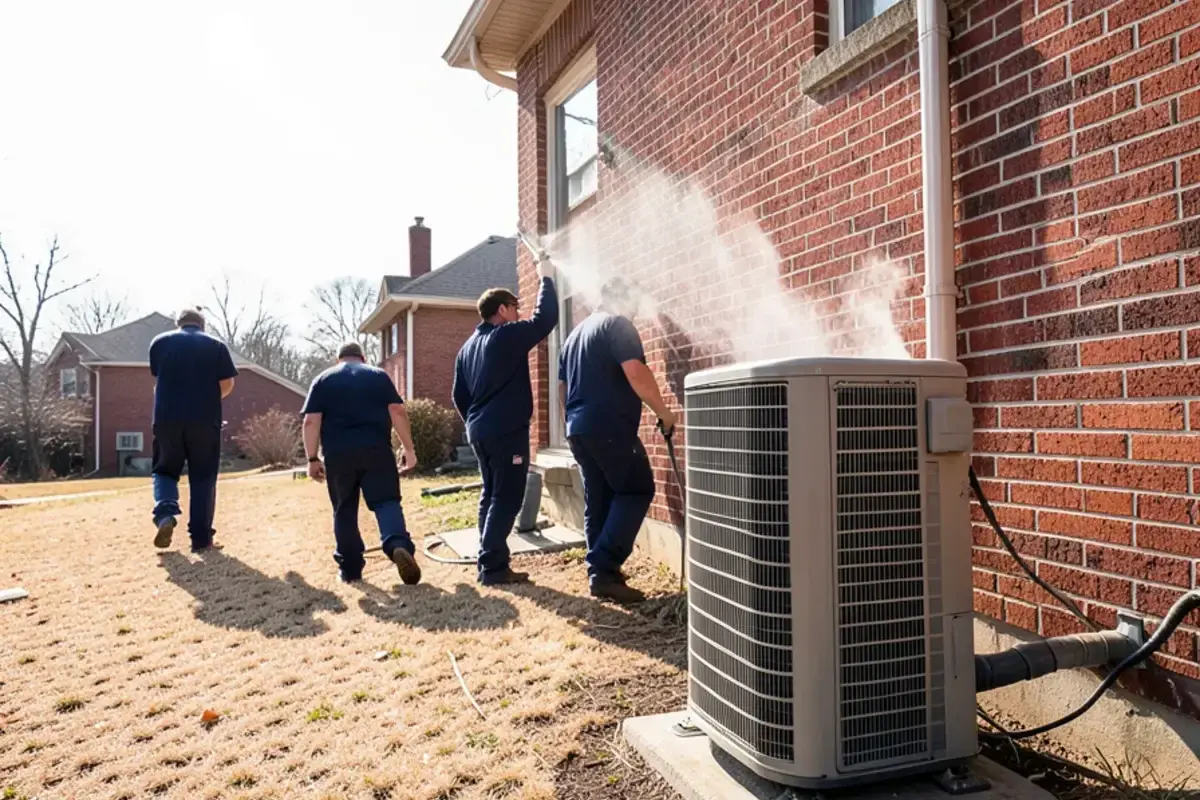
If your AC stops working in a heat wave, switch the thermostat to cool, check the breaker and filter, and look at the outdoor unit before you call anyone. Those checks take about ten minutes and sometimes end the problem. If not, keep everyone cool, call a technician, and stop running a unit that blows warm air or ices up.
Buffalo does not see many truly hot days. The Great Lakes Integrated Sciences and Assessments program at the University of Michigan puts the number of days above 90°F at about 2.1 a year. That is exactly why a failure feels like a surprise, and why many older homes have only a window unit or one central system that carries the whole load.
What should you check in the first ten minutes?
Work through these in order. Each one rules out a cause that has nothing to do with a broken part.
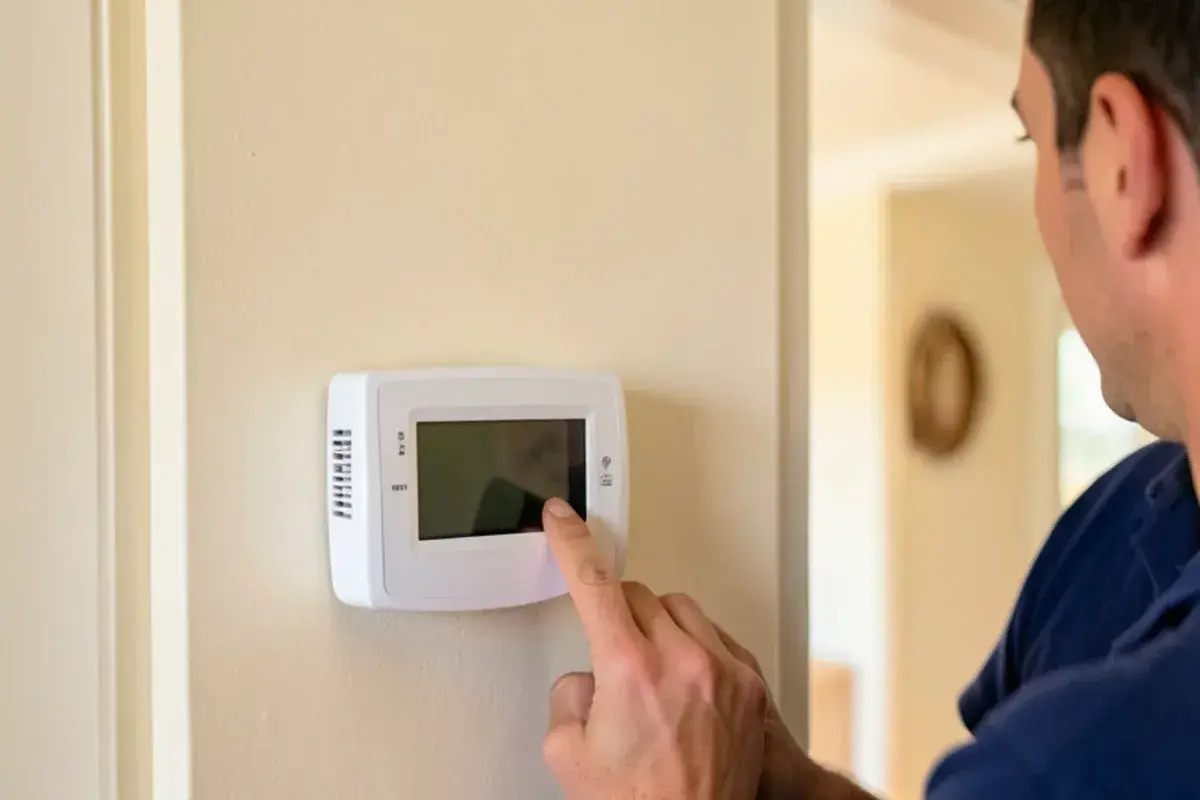
- Thermostat. Confirm it is set to cool, the setpoint is several degrees below the room temperature, and the display is on. A dead battery in a thermostat is a common reason for a silent system.
- Breakers. Look at the panel for a tripped breaker for the outdoor unit and one for the indoor blower. Reset it once. If it trips again, leave it off.
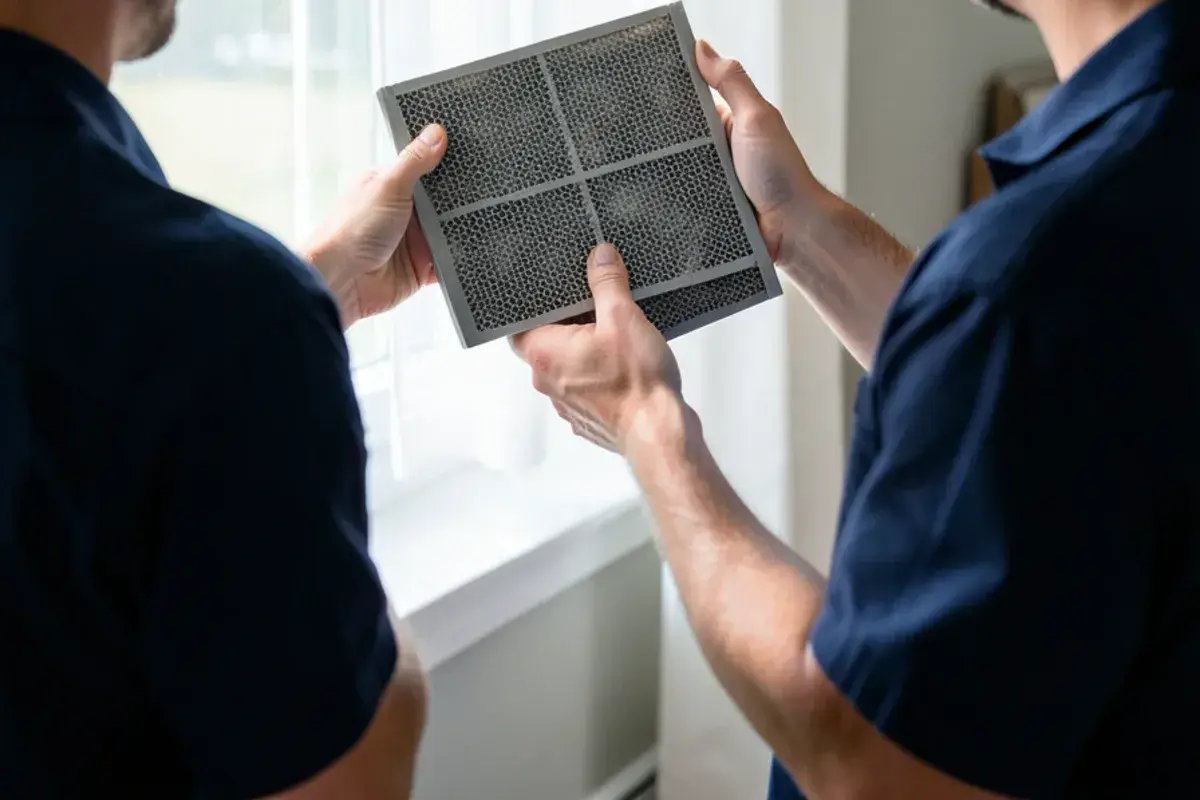
- Filter. Hold it up to a window. A filter packed with dust chokes airflow, and the coil can freeze as a result.
- Outdoor unit. Is the fan spinning? Is it humming but not starting? Clear leaves, grass clippings or cottonwood fluff from around it, and keep your hands out of the fan.
- Indoor drain. Many systems have a float switch that shuts the AC off when the condensate drain backs up. Water in the drain pan or near the indoor unit points here.
What do the symptoms tell you?
What you notice in those ten minutes helps a technician arrive with the right parts.
| What you see or hear | Likely direction | What to do |
|---|---|---|
| Nothing runs, thermostat blank | Power, thermostat batteries or a safety switch | Check batteries and breaker, then the drain pan |
| Indoor fan runs, outdoor unit silent | Capacitor, contactor or a tripped breaker | Leave it off and call |
| Outdoor unit runs, air from vents is warm | Frozen coil, low refrigerant or a failing compressor | Turn the system off and call |
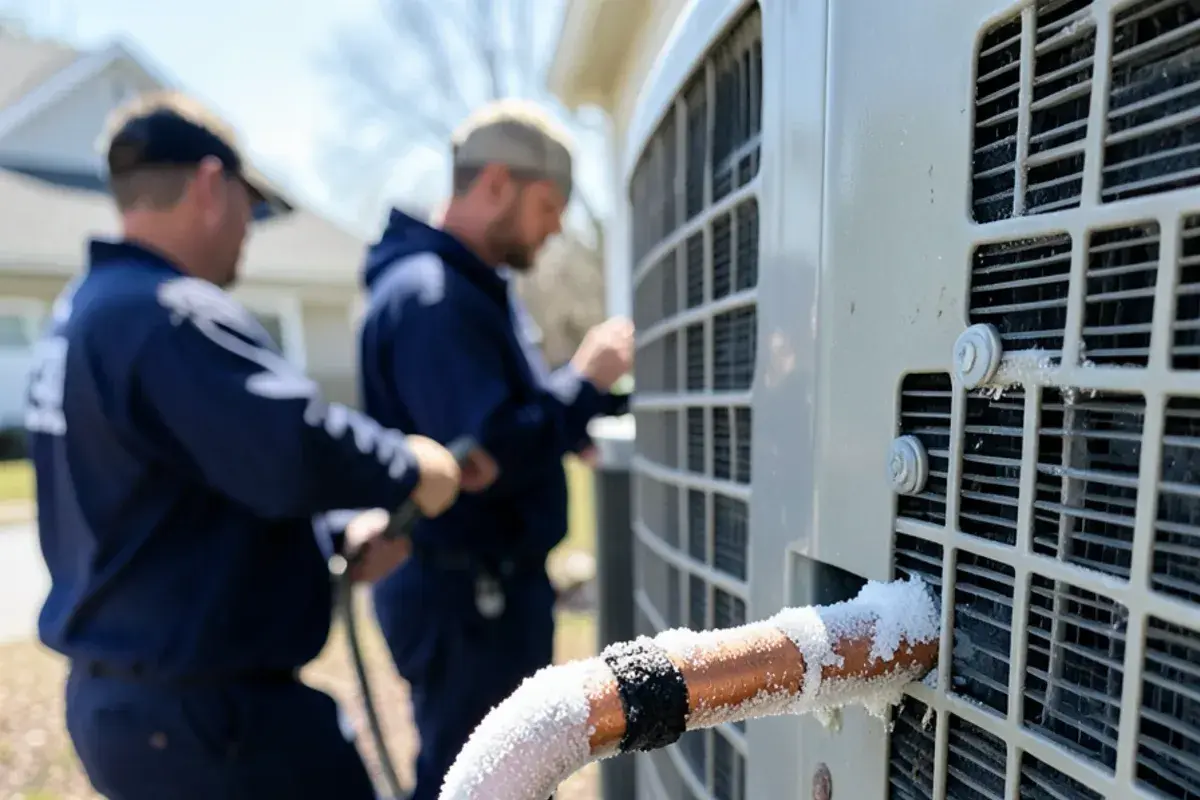
| Ice on the copper line or indoor coil | Restricted airflow or refrigerant loss | Switch to fan only to thaw, then call |
| Weak airflow from every vent | Dirty filter, blower trouble or a duct problem | Replace the filter and retest |
For a frozen system, set the thermostat to off and the fan to on. That moves warm room air across the coil and thaws it faster. It can take a few hours, and it does not fix whatever caused the freeze.
Do not switch cooling back on while ice is still visible. Running the compressor against a frozen coil can push liquid refrigerant back into it, which is a far bigger repair than a clogged filter. Wait until the coil and the copper line are clear of ice and dripping has stopped. Heavy ice can take much of a day to melt, so plan on a technician visit rather than a restart. If the coil freezes again after a thaw and a new filter, the cause is somewhere else, usually low refrigerant or a blower problem.
One more habit to avoid: after any shutoff, wait about five minutes before you turn cooling back on. Most compressors need that pause for the pressure on both sides to equalize, and repeated quick restarts are hard on them. Switching the thermostat off and on a dozen times will not coax a dead part back to life.
How do you keep people safe until the AC is fixed?
Heat is the bigger risk here, not the broken equipment. The National Weather Service lists young children, older adults, people with chronic medical conditions and pregnant women as most at risk, and it asks you to check on neighbors who live alone.
- Close blinds and curtains on the sunny side of the house, and stay on the lowest floor. Upstairs bedrooms get the worst of it.
- Run box fans in windows at night to pull cooler outdoor air through the house, then shut the windows in the morning.
- Drink water, take cool showers, and avoid cooking with the oven.
- If you cannot get comfortable, spend a few hours in a library, mall or a relative's home.
- Call 911 for confusion, fainting, vomiting or a very high body temperature. Do not wait on a repair appointment.
Be careful with fans once the house gets truly hot. The National Weather Service says not to point a fan at yourself when the room is above 90°F, because the dry moving air can dehydrate you faster. Below that, a fan helps. Above it, a cool shower, a damp cloth on the neck and a trip somewhere air-conditioned do more.
If your home has no place to cool off, Erie County Department of Health notes that the City of Buffalo and other municipalities open free cooling spaces when temperatures rise above 85°F, and that you can call 2-1-1 for locations and hours. Call the site before you go to confirm it is open and ask about requirements.
Never leave a child, a disabled person or a pet in a parked car, even for a minute. The National Weather Service says so plainly.
How we look at an AC that quit
We start with the cheap and common causes before we talk about parts. A dead capacitor, a stuck contactor, a clogged drain or a frozen coil each look like "the AC is broken" from the couch, yet each one has a very different cost and timeline. Fixr's January 2026 national data puts typical AC repairs around $250 to $700, with a capacitor in the low hundreds. That is a national aggregator figure, not our quote, and we publish no price list. We tell you what we find and give you a clear quote before work starts.
Our office is open Monday through Friday, 7:30 AM to 5:00 PM, and closed on weekends. Call anyway outside those hours and leave a message. Customers have reached us on weekends, and one reviewer who called on a Sunday morning got a return call from John. If we cannot get to you in time, we will say so honestly and suggest a stopgap. One customer wrote about an AC emergency in summer 2021, and that review is worth reading:
“Vantage was available to make a house call that day and they were competitively priced.”
For the full picture of what we do on these calls, see emergency AC repair and our AC repair page.
How do you avoid this next summer?
Most heat-wave failures are slow problems that finally hit a hot day. A yearly tune-up catches weak capacitors, dirty coils and low charge before the first 90 degree afternoon. AC maintenance in spring is the cheapest fix there is. Change the filter on schedule, keep the outdoor unit clear by two feet on every side, and rinse the coil gently with a hose in May.
When should you call, and what should you say?
Call when the checks do not restore cooling, when the unit trips a breaker repeatedly, or when you see ice or water where it should not be. Tell us what the thermostat shows, whether the outdoor fan is moving, and what you already tried. A short list of notes makes the first phone call much more useful:
- The room temperature and setpoint on the thermostat, and whether the display is lit.
- Whether the breaker tripped, and how many times it has tripped since the problem started.
- Whether the outdoor fan is spinning, humming or silent.
- Any ice, water or odd smell, and where you saw it.
- The model number on the outdoor unit's data plate. A phone photo of it saves a trip back outside.
We also ask about the age of the system and whether it has had trouble before. A condenser that is past its middle years and failing for the second summer in a row leads to a different conversation than a first-time capacitor failure, and our repair or replace guide for an old AC lays out how we weigh that. For a failed system you are already considering replacing, our page on AC installation explains what a proper sizing and install involves. Homes in Cheektowaga are about 20 minutes from our Orchard Park base. Call (321) 666-8870 and we will tell you honestly when we can get there.
Quick answers
Is it safe to keep running an AC that blows warm air?
Usually not for long. If the outdoor unit is humming but the air is warm, or you see ice on the copper line, shut the system off at the thermostat. Running a struggling compressor can turn a modest repair into a costly one. Use fans and shade while you wait for a technician.
How hot is too hot to stay in the house?
There is no single number, because risk depends on age, health and how long the heat lasts. The National Weather Service names young children, older adults, people with chronic conditions and pregnant women as most at risk. If anyone in the home is confused, faint or vomiting, call 911 and move them somewhere cooler.
Should I call before or after I check the breaker?
Check first, since it takes two minutes and sometimes ends the problem. A tripped breaker or a dirty filter explains a fair share of no-cooling calls. If the breaker trips again right away, stop resetting it and call us. A breaker that keeps tripping points to a failing part.
Sources
- National Weather Service, heat safety and who is most at risk
- National Weather Service, how to stay cool during extreme heat (fans, cool places, clothing)
- Erie County Department of Health, places to stay cool and cooling centers
- Great Lakes Integrated Sciences and Assessments, University of Michigan, Buffalo climate summary
- Fixr, air conditioner repair cost data, updated January 2026